


From Brewery Waste to Protein: Swiss Startup Scales Production of Yeast-Based Ingredients

Too long to read? Go for the highlights below.
Swiss startup Yeastup has opened an industrial facility processing 4,000 litres of spent brewer's yeast hourly, converting beer waste into functional proteins and fibres
The company's yeast protein achieves a digestibility score of 1.0; matching eggs and beef: whilst generating 81% fewer emissions than beef production
Yeastup's ingredients replace eggs in vegan products and enhance plant-based meats, addressing both sustainability goals and the current egg supply crisis
Breweries worldwide generate vast quantities of spent yeast which is the microorganisms exhausted after fermentation. Most ends as animal feed or waste. Swiss food technology company Yeastup has spent the past five years developing industrial processes to transform this byproduct into high-value protein ingredients, and recently opened a facility capable of processing the waste from substantial brewing operations.
Industrial Scale Operations
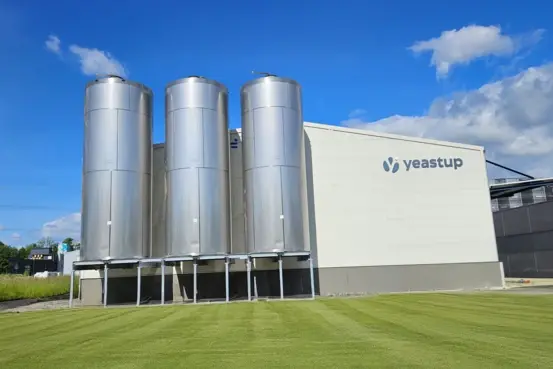
The Lyss facility, converted from a former dairy plant with approximately $12.5 million in venture funding, now operates at 4,000 litres per hour processing capacity: a 150% increase from initial pilot operations earlier in 2025. The 1,700 square metre site employs 16 people and aims for continuous production beginning early 2026.

Co-founder Daniel Gnos and partner Urs Briner developed a patent-pending process combining mechanical cell disruption with membrane separation technology. This approach isolates proteins, beta-glucans (a type of fibre), and mannoproteins (protein-sugar compounds) whilst removing bitter fermentation byproducts. The system recirculates water, reducing overall resource consumption: a practical application of circular economy principles in food production.
The resulting protein achieves a digestibility score of 1.0, the maximum value shared by eggs, whey, and beef. This metric measures how efficiently the human body can absorb and utilise protein which is a crucial for food manufacturers seeking animal protein alternatives with equivalent nutritional performance.
Addressing Market Needs
Yeastup markets its proteins under the Yeastin brand across three formulations. Yeastin Prime provides gelling, binding, and emulsifying properties suitable for replacing eggs in mayonnaise, spreads, and baked goods. The timing proves fortuitous: avian influenza outbreaks culled hundreds of millions of chickens in 2024-2025, sending egg prices to record levels and creating supply shortages across multiple markets.
Yeastin Nutra contains 84% protein with high solubility, targeting nutrition bars and ready-to-mix beverages. The company demonstrated its first vegan protein bars at the facility opening, where the yeast protein replicated the functionality of hydrolysate which is a processed ingredient conventionally used to improve texture and moisture retention. Yeastin Umami enhances the savoury notes and texture of plant-based meat alternatives without requiring additional flavouring compounds.
Beyond protein, Yeastup produces UpFiber ingredients including beta-glucan formulations for dietary supplements, functional foods, and skincare applications. Beta-glucans have documented benefits for immune function and gut health, though the company positions these as functional ingredients rather than making specific health claims.
Competitive Landscape and Next Steps
The approach situates Yeastup amongst a growing cohort of companies valorising yeast streams, including Angel Yeast, ProteinDistillery, Revyve, and others pursuing similar upcycling strategies. Each employs distinct processing methods and targets different market segments, suggesting sufficient demand to support multiple players.
Production generates 81% fewer emissions compared to beef protein, according to company calculations, whilst requiring no agricultural land: relevant as food systems face pressure to reduce environmental footprints. However, the technology must prove commercially viable at scale. Converting spent yeast requires energy-intensive processing, and profitability depends on commanding premium pricing versus established protein sources.
Yeastup now seeks additional Series A funding to accelerate production and expand into international markets. Co-founder Gnos noted that with industrial readiness achieved and initial customer projects underway, the timing suits investors interested in alternative protein infrastructure.

Whether yeast proteins can capture significant market share depends on multiple factors: production costs relative to conventional proteins, manufacturer adoption rates, consumer acceptance, and regulatory environments across different markets. The Lyss facility represents a tangible step from pilot-scale experimentation toward commercial reality; though the brewery waste upcycling sector remains in relatively early stages of market development.


