Äio and TFTAK Win €1.94M to Build a Digital Platform for Waste-Derived Microbial Fats

Estonian biotech Äio and research partner TFTAK have secured €1.94M from the Estonian Business and Innovation Agency to develop a digitalised production platform for microbial oils made from food and wood industry waste.
The three-year DigiFoundry 2.0 project integrates synthetic biology, precision fermentation, and real-time digital process control to shorten development cycles and reduce the cost of scaling microbial fat production.
If successful, the platform could accelerate the commercial viability of fermentation-derived fats as alternatives to palm, coconut, and fish oils, with implications for both food manufacturers and personal care brands.
A TalTech Spinout With a Waste-Valorisation Mission
Äio, a spinout from Tallinn University of Technology (TalTech), was founded by professor Petri-Jaan Lahtvee and researcher Nemailla Bonturi. The company feeds carbon-rich byproducts from the wood, dairy, and broader food industries to a proprietary 'red yeast' microbe, which converts them into lipids that can substitute for animal and plant-based fats. According to the company, the process requires 97% less land and 90% less water than palm oil production and is around ten times faster.
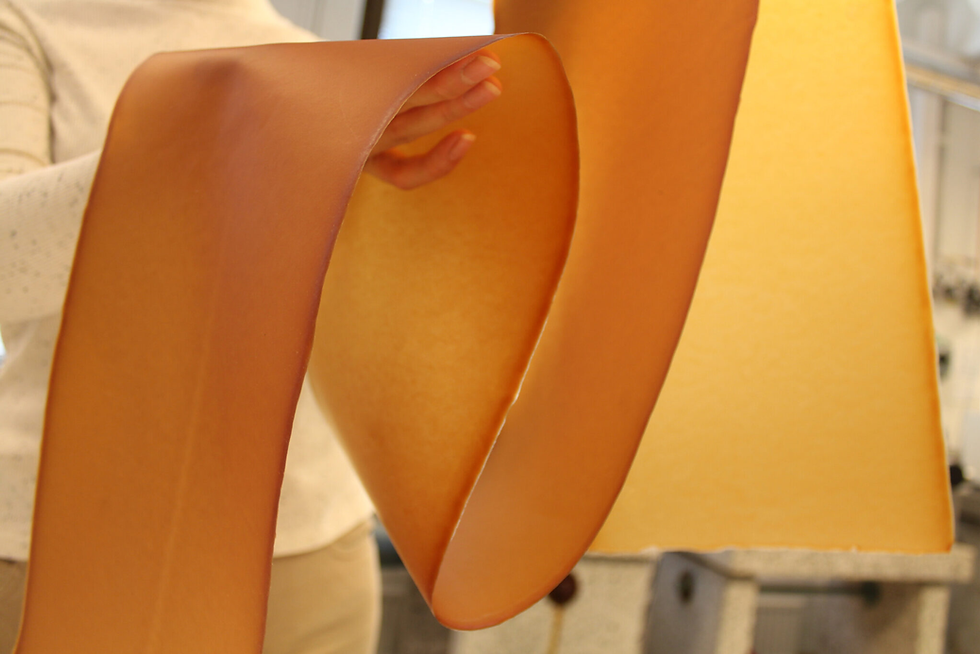
Äio's product portfolio already includes Fermira RedOil, a lipid used in a skin-boosting serum co-developed with personal care brand Tilk; Encapsulated Oil, a high-protein, high-fibre fat substitute for food and cosmetics; and ZymaLipid Complex, a texture-enhancing alternative to palm, coconut, and soybean oils.
The latest funding, awarded through the Estonian Business and Innovation Agency's Applied Research Programme, ranked Äio's application first among all submissions in the scheme's tenth financing round. The total project budget is €2.53M, with the grant covering €1.94M of that over three years.
What DigiFoundry 2.0 Adds to the Original
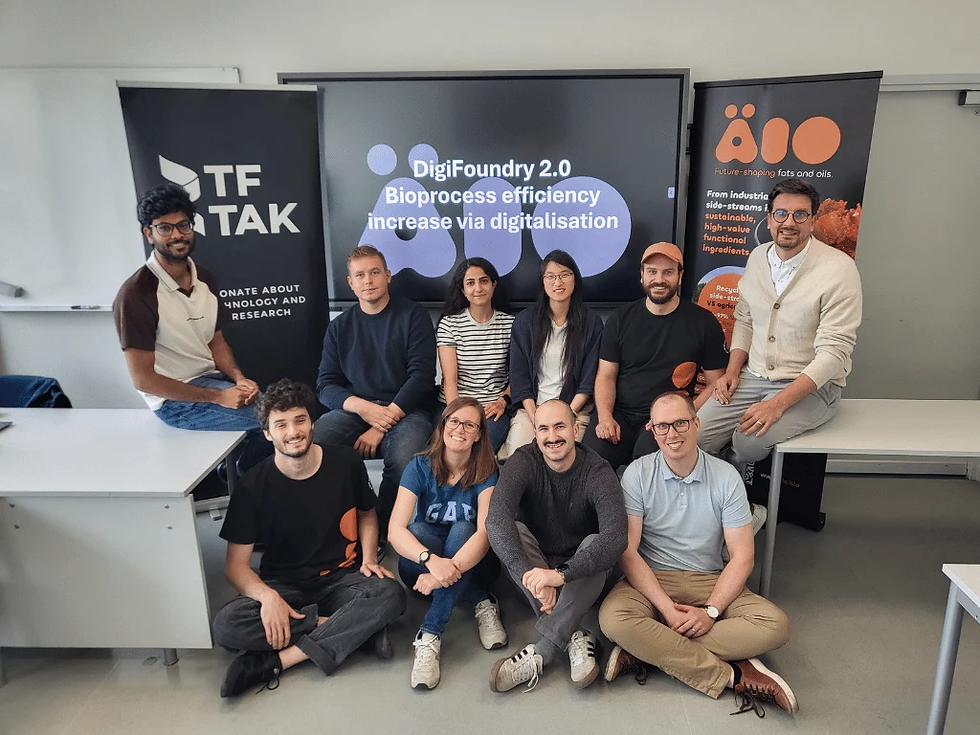
Äio and TFTAK, an Estonian applied research organisation specialising in bioprocess optimisation and food science, have collaborated since 2023 on the original DigiFoundry project. That initiative established a design-build-test-learn (DBTL) cycle to accelerate microbial strain development, alongside pilot-scale fermentation trials, sensory analysis, and a techno-economic assessment of the production process. TFTAK also contributed synthetic biology capabilities and microbial screening methods, including identification of unwanted flavours and aromas in the resulting oils.

DigiFoundry 2.0 (DF2.0) extends that foundation by connecting strain engineering with increasingly automated and data-driven fermentation control. The aim is to create an integrated production system that generates richer information from each development cycle, shortens the time between laboratory findings and industrial application, and lowers both development and manufacturing costs.
Steven van der Hoek, scientific lead at TFTAK, described the project as an effort to generate significantly more information from every development cycle and apply that knowledge to improve the next one, with industrial application in mind from the outset.
The Commercial Logic of Digitalisation
For Äio, the investment in digitalisation is not incidental; it is central to making precision fermentation economically viable at scale. Biological processes generate large volumes of data covering microbial performance, fermentation conditions, productivity, and product characteristics. Connecting those data points through automated systems allows the company to optimise processes in real time, adapt to different raw materials more rapidly, and reduce the cost of bringing new ingredients to market.

The platform is also designed to support technology licensing, meaning that the microbial strains and processes developed through DF2.0 could be offered to third parties, not only used internally. Äio is reportedly in discussions with more than 120 partners worldwide, including major food manufacturers, and is expected to pursue a Series A fundraise imminently. The company is also aligning its ingredients with EU regulatory requirements, including full safety and compositional characterisation.
As other fermentation-derived fat startups demonstrate, the competitive landscape for microbial oil production is growing, and the race to achieve cost-competitive industrial scale is intensifying. DF2.0 represents Äio's bet that smarter digital infrastructure, not just better biology, will determine who gets there first.