New Fungi Platform Could Deliver African-Made Vaccines for a Dollar a Dose

Updated: Sep 8
A team at the University of the Witwatersrand in South Africa is developing a fungus-based vaccine platform that could produce doses for around a dollar, potentially transforming vaccine access across Africa.
The platform uses a modified fungal strain called C1, originally developed by Dyadic International for industrial enzymes, which produces vaccine proteins rapidly and cheaply using standard fermentation equipment.
A Rift Valley fever vaccine built on the platform has already shown safety and efficacy in animal trials, with an HPV vaccine targeting strains more prevalent in sub-Saharan Africa planned as the next step.
A Fungus From the Compost Heap
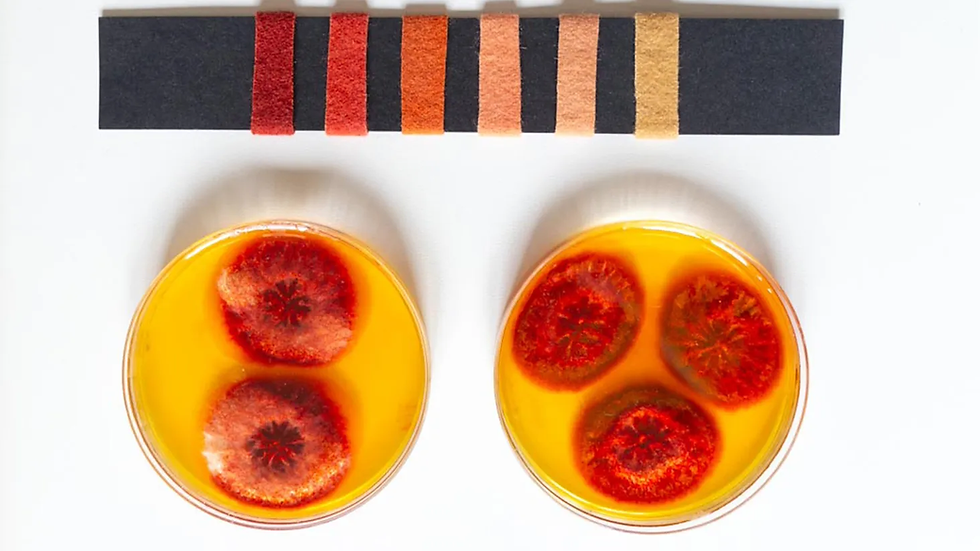
When researchers at the University of the Witwatersrand (Wits) in Johannesburg began looking for ways to make vaccines cheaper and more locally producible, they turned to an unlikely source: a fungal strain originally isolated from compost. That strain, known as C1, was first developed by Dyadic International, a US biotechnology company, for producing industrial enzymes. It has since been repurposed for vaccine and therapeutic protein production, and Wits has gained access to it through a technology transfer and licence agreement with Rubic One Health, a South African consortium focused on affordable vaccines.

The C1 platform belongs to a class of recombinant protein production systems, meaning that foreign genetic instructions are inserted into the fungal host, which then uses its cellular machinery to manufacture the target protein at scale. What makes C1 particularly attractive is its speed and yield. According to Dr Kubendran Naidoo at the Wits Vaccines and Infectious Diseases Analytics Division and the Antiviral Gene Therapy Research Unit, the platform can produce viable cell lines in roughly two months, compared with around six months for mammalian-based systems. It relies on simple growth media, including sugar, yeast, minerals, and vitamins, and requires no animal serum, sidestepping both ethical concerns and supply chain fragility.
Crucially, the strain has been modified so that it cannot sporulate, meaning it does not persist in the environment, which makes it safer to handle and manufacture at scale. The processes involved draw on conventional microbial fermentation and molecular biology skills that already exist in South Africa and other low- and middle-income countries, rather than demanding the specialised infrastructure required by platforms such as mRNA production.
The Cold Chain Advantage
One practical consideration in vaccine distribution across sub-Saharan Africa is the cold chain: the network of refrigerated storage and transport required to keep vaccines viable. Subunit proteins produced on the C1 platform are stable at standard refrigeration temperatures of 2 to 8 degrees Celsius, rather than requiring the frozen or ultra-cold storage that mRNA vaccines demand. For remote and rural areas where maintaining a deep-freeze supply chain is difficult, this is a meaningful logistical advantage.

The team's cost projections suggest the platform could eventually produce certain vaccines, including one for human papillomavirus (HPV, the virus responsible for cervical cancer), for approximately one dollar per dose, though this figure remains a target rather than a demonstrated outcome.
From Livestock to HPV: Building the Track Record
The team deliberately began with veterinary applications to establish technical credibility before advancing to human vaccines. Their first candidate targets Rift Valley fever (RVF), a zoonotic disease that affects both livestock and people and is transmitted primarily through infected mosquitoes or contact with infected animals. The existing licensed veterinary vaccine uses a live-attenuated virus, which carries safety concerns for pregnant ruminants, including high rates of abortion. The C1-based candidate avoids this by using only a specific antigen rather than a whole pathogen.

A small controlled challenge study, conducted at a partner institution in Kenya after no suitable biosafety level 3 facility was available locally, found the vaccine candidate to be safe and protective relative to controls. Field trials are planned for 2027.
The HPV programme, led in part by postdoctoral fellow Dr Rebecca van Dorsten, aims to address a regional epidemiological reality: HPV subtype 35 is increasingly prevalent across sub-Saharan Africa, appearing more frequently than HPV-18 in some areas, yet it is absent from currently available vaccines. The team plans to develop a trivalent vaccine covering HPV-16, -18, and -35, with an eventual nonavalent formulation that incorporates HPV-35 from the outset.
Limitations and the Road Ahead
The Wits team is small, comprising two postdoctoral fellows, two MSc students, and Naidoo himself, and is operating under significant resource constraints. Nevertheless, DYAI-100 Phase 1 clinical program met its primary endpoint demonstrating that both dose levels were safe and well tolerated and induced robust immune responses, including both humoral and cell-mediated responses, in vaccinated individuals.
The project is aligned with the Gavi-supported African Vaccine Manufacturing Accelerator (AVMA), a financing mechanism offering up to 1.2 billion US dollars over ten years to develop Africa's vaccine manufacturing capacity beyond fill-and-finish operations. Whether a small academic team can navigate from promising platform to licensed product is the question this work must ultimately answer, and it will take considerably more than passion and ingenuity to get there.