Purdue's Mycelium-Bacterial Cellulose Film Outperforms Most Biodegradable Materials on Strength and Optical Tuning

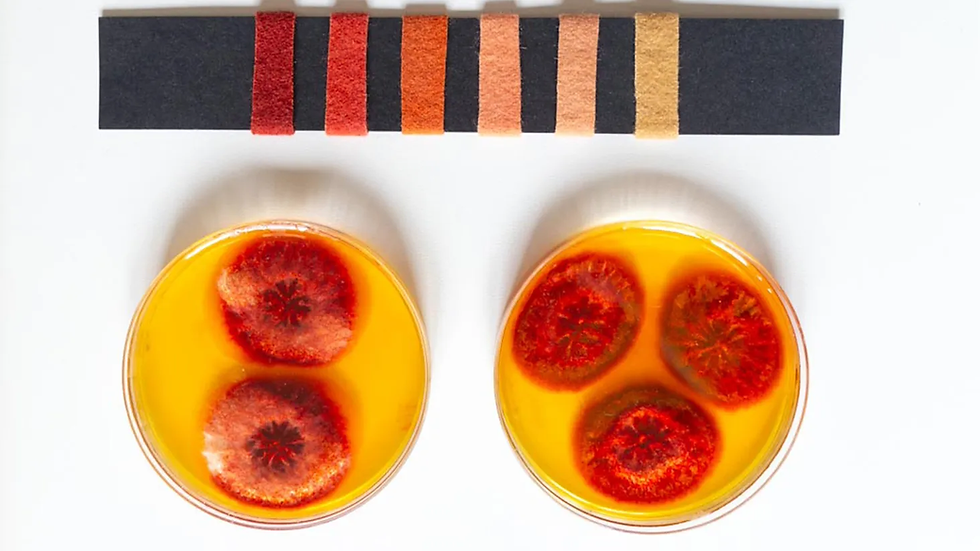
Researchers at Purdue University have grown a composite film by co-culturing the white-rot fungus Phanerochaete chrysosporium with cellulose-producing bacteria, yielding a material that simultaneously achieves high tensile strength and toughness, outperforming most reported biodegradable films.
The film's strength comes from biological crosslinking: hydrogen bonds form naturally between mannans in the fungal cell wall and cellulose chains from Komagataeibacter xylinus, creating a self-assembled micro-nano fibre network without chemical additives.
Because the material is fully biodegradable, self-healing, and optically tuneable, it has potential applications in sustainable coatings for electronics, flexible displays, and radiative cooling, opening a credible path for living materials to replace synthetic polymer films.
A Living Co-Culture Strategy
Published in Nature Communications, the study from Purdue University's School of Mechanical Engineering describes a fabrication method that forgoes conventional chemistry. Instead of blending materials in a reactor, the team designed a liquid medium, designated LM-HS, that supports the simultaneous growth of fungal mycelium and bacterial cellulose. As hyphae from Phanerochaete chrysosporium elongate and branch, Komagataeibacter xylinus deposits cellulose nanofibres around them, producing an interpenetrating three-dimensional network held together by interfacial hydrogen bonding.

The approach draws on a principle well established in natural hierarchical composites: performance emerges from structure across multiple scales. Mycelial hyphae measure roughly 2.3 micrometres in diameter; bacterial cellulose nanofibres measure approximately 60 nanometres. The interplay between these two length scales, confirmed by cryo-scanning electron microscopy and attenuated total reflectance Fourier transform infrared spectroscopy, is what gives the resulting mycelium/bacterial cellulose (MBC) film its unusual combination of properties.
This co-culture principle connects to broader research on engineered living materials, where microbial activity is increasingly used to programme structure and function directly, rather than imposing it through external processing.
What the Material Can Do
The MBC films achieved a tensile strength of 195.62 ± 9.06 MPa, roughly 1.5 times that of pure bacterial cellulose film (134.01 ± 13.63 MPa) and nearly six times that of pure mycelium film (33.18 ± 3.65 MPa). Toughness, a measure of energy absorbed before fracture, reached 11.51 ± 0.94 MJ m⁻³, compared with 2.69 ± 0.39 MJ m⁻³ for pure bacterial cellulose and 0.23 ± 0.04 MJ m⁻³ for pure mycelium. The authors attribute this to a multistep fracture pathway involving fibre stretching, crack deflection, and fibre pull-out, enabled by the hierarchical architecture.

Optical performance is equally notable. By adjusting culture duration from four to eight days, the nitrogen content of the film increases as more mycelium grows in, introducing additional interlamellar air pores. These pores create refractive index mismatches that scatter light. Haze can be tuned from 16.0% at four days to 78.5% at eight days, while transmittance remains above approximately 80%. This combination of high haze and high transparency is not readily achieved in natural or synthetic biodegradable films, according to the authors' comparison with published benchmarks.

The MBC film also degrades substantially in soil. A burial test showed approximately 75% area loss after four weeks at room temperature, consistent with good biodegradability.
Radiative Cooling and Flexible Electronics
The research team coated MBC hydrogel onto glass and flexible polyimide substrates by simple air-drying. Hydrogen bonding between the film and the substrate surface provides adhesion without adhesives. When applied to glass and tested outdoors on the roof of Purdue's Herrick Labs, the MBC-coated glass suppressed surface temperature by approximately 3°C relative to bare glass under solar illumination, attributed to an improved mid-infrared emissivity of around 93% within the atmospheric window. A follow-up test after 30 days of outdoor exposure showed continued cooling of approximately 2.5°C, suggesting reasonable environmental stability.

The team also notes that MBC glass blocks 68.0% of UV light, compared with bare glass, which could extend the operational lifetime of outdoor display components.
This work connects to emerging research on mycelium-cellulose composites that demonstrate how fungal fibres combined with other biopolymers can match or exceed synthetic material benchmarks.
Limitations and the Road Ahead
The study was conducted at laboratory scale in petri dishes, and questions around scalability, manufacturing consistency, and long-term outdoor durability remain open. The biodegradability test used a controlled indoor soil environment rather than real-world conditions. The radiative cooling experiments reflect a specific set of weather conditions in Indiana rather than a systematic climatic study. Three co-inventors on a related patent application are among the authors, which represents a declared competing interest. Independent replication and larger-scale fabrication trials will be necessary before MBC films can be evaluated seriously for commercial use.