Golden Oyster Mushroom Declared High-Risk Invasive Species in the UK

The UK government has classified the golden oyster mushroom (Pleurotus citrinopileatus) as a high-risk invasive species following confirmed sightings in English woodland.
The fungus, linked to home-growing kits and hobbyist cultivation, is feared to outcompete native fungi and disrupt forest ecosystems wherever it establishes itself.
Climate models are now being deployed to forecast how far and fast the species could spread across the UK and Europe, as mycologists call for urgent containment measures.
A Forager's Find With Far-Reaching Consequences
In spring 2024, fungi enthusiast Heather Clarke was foraging near an ancient woodland in northern England when she came across hundreds of bright yellow mushrooms blanketing a fallen log. Her first instinct was oyster mushrooms, but the colour was wrong. The discovery turned out to be one of only two confirmed sightings of the golden oyster mushroom in the UK, and it was enough to trigger serious concern among mycologists.
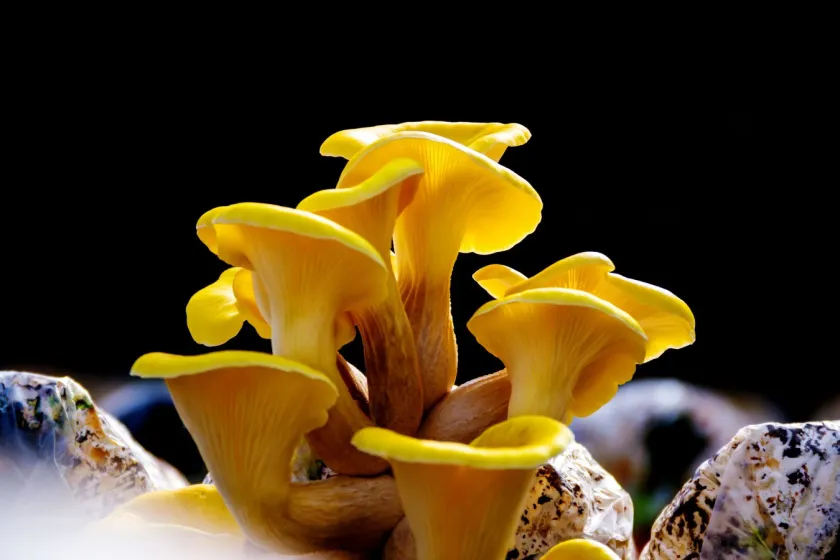
This week, the UK government formally classified the golden oyster mushroom as a high-risk invasive species, placing it alongside Japanese knotweed and grey squirrels on the list of organisms considered a significant threat to native biodiversity.
From Kitchen Hobby to Ecological Hazard
The golden oyster mushroom, prized for its flavour and striking appearance, has become a popular subject for home-growing kits sold widely to hobbyists. That popularity appears to be at the root of the problem. In the United States, the species has already spread across 25 states, a rapid expansion attributed to small-scale growers and enthusiasts releasing the fungus, intentionally or otherwise, into the wild.

Aishwarya Veerabahu, a mycologist at the University of Wisconsin-Madison, describes the ecological risk in stark terms. Wherever the golden oyster mushroom spreads, it appears to outcompete native fungal species, effectively crowding them out and reshaping the decomposer communities that underpin forest health. Native fungi play critical roles in breaking down organic matter and forming symbiotic relationships with trees; displacing them could have cascading effects on woodland ecosystems that are difficult to reverse.
There are also indications that hobbyist breeding programmes may have inadvertently enhanced the fungus's reproductive capacity, making it faster to colonise new environments than its wild counterparts. This possibility is prompting particular alarm among researchers, who worry that the strains now circulating through the home-growing market may be more ecologically aggressive than naturally occurring populations.
The rapid growth of the mushroom supplement and cultivation sector across Europe adds further urgency to the question of which species are entering the consumer supply chain and what happens when they escape it.
Mapping the Risk and Responding to It
Scientists are now applying climate models to assess how far the golden oyster mushroom could realistically spread across the UK, Europe, and beyond. The modelling aims to identify which regions offer suitable conditions for establishment, and how quickly the fungus might move through them given current trends in temperature and rainfall.
Veerabahu's position is that a rapid and coordinated response is needed. Containment procedures, she argues, must be developed alongside whatever enjoyment the public derives from growing and eating the mushroom. The UK's new classification gives regulators and land managers a framework to act, but the practical challenge of tracing and removing an already-distributed fungal species from the environment is considerable.
The broader question raised by this episode touches on how the conservation of fungal biodiversity is weighed against the growing commercial and hobbyist demand for edible species. As the home-growing market expands, the risk of accidental introductions is unlikely to diminish without clearer guidance on safe cultivation and disposal practices.
What remains uncertain is how extensively the golden oyster mushroom has already spread beyond the two confirmed UK sightings, and whether early intervention can prevent the kind of explosive establishment seen in the United States.