


Clean Food Group Turns Surplus Bread into a Palm Oil Alternative for the Beauty Industry

Too long to read? Go for the highlights below.
A UK biotech startup is converting waste bread into a high-performance cosmetic oil, offering the beauty industry a credible alternative to palm oil.
CleanOil 25 has already received regulatory approval in the UK, EU, and US, and was co-developed with major industry partners THG Labs and Croda.
The technology, rooted in a decade of university research, cuts greenhouse gas emissions by over 95% compared to conventional agricultural oils.
The beauty industry has long had a palm oil problem. The ingredient appears in everything from moisturisers to shampoos, yet its production drives tropical deforestation, fuels wildfires, and generates substantial carbon emissions. For years, meaningful alternatives have proved elusive. Now, a London-based biotech startup believes it has found one, and the answer begins not in a rainforest, but in a loaf of unwanted bread.

Fermentation Meets Food Waste
Clean Food Group has spent several years developing a platform that uses yeast fermentation to convert surplus food into high-performance fats and oils. The company's origins lie at the University of Bath, where co-founder and technical lead Professor Chris Chuck led a decade of research underpinning the technology. That academic foundation was backed by £7.5 million in UK government funding, giving the startup a rigorous scientific base before it sought commercial partnerships.

The process works by feeding non-genetically modified yeast strains on circular feedstocks, with surplus bread serving as a primary input. Through fermentation, the yeasts convert the carbohydrates in the bread into lipids, which are essentially fats, that can substitute for tropical oils or petroleum-derived mineral oils in industrial formulations. The resulting oils are produced without the land-use consequences associated with palm or coconut cultivation. Fungal fermentation applied to food-grade side streams is gaining wider recognition as a method for extracting value from material that would otherwise go to waste, and Clean Food Group's approach fits neatly within this broader trend.
CleanOil 25: From Laboratory to Formulation
The company's debut cosmetic ingredient is CleanOil 25, a yeast-derived oil designed as a base for skincare, haircare, and personal care products. It offers a rich, silky texture and contains notable levels of omega-6 and omega-7 fatty acids, properties associated with premium botanical oils. Crucially, it also maintains colour and odour stability, which are practical requirements that cosmetic formulators cannot overlook when switching ingredients.
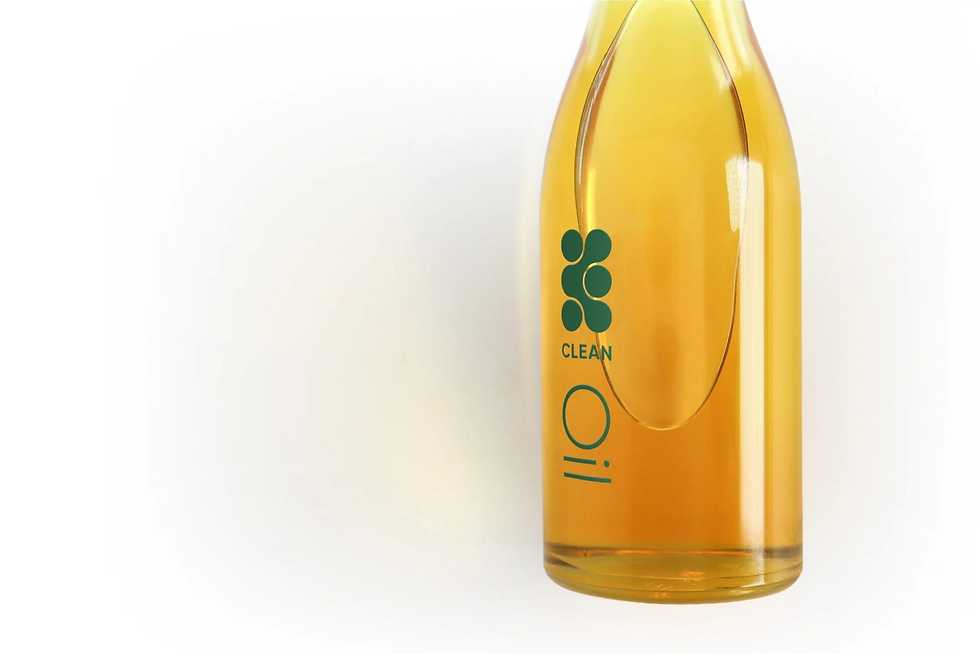
CleanOil 25 was not developed in isolation. Clean Food Group co-developed the product with THG Labs, the product development division of UK personal care company THG, and Croda, a specialty chemicals business. A partnership announced in October 2024 formalised the collaboration, with the explicit goal of creating low-impact raw materials for the beauty sector. THG Labs provided the formulation expertise to translate laboratory science into commercially viable products, confirming that the oil performs reliably within real product development conditions, not merely in controlled experiments.
The ingredient has already received regulatory approval for cosmetic use in the UK, the EU, and the United States, removing a significant barrier to commercial adoption. The company unveiled CleanOil 25 at the In-Cosmetics Global show in Paris in April 2026.
Validating Scale and Targeting Investment
Scientific credibility and regulatory approval are necessary conditions for market entry, but neither suffices without manufacturing capacity. Clean Food Group addressed this directly in 2025, completing a 60,000-litre production run that yielded two tonnes of oil, a milestone supported by Döhler Ventures. This scale-up demonstrated that the fermentation process is not merely a bench-scale curiosity.
To expand capacity further and reduce unit costs, the startup acquired assets from Algal Omega 3, a microalgal oil producer that entered administration. The acquisition included a 12-acre site in Knowsley, Liverpool, which now operates alongside the company's existing demonstration plant in Ledbury as a production hub for its yeast-derived lipids. The Knowsley site in particular offers meaningful room for growth without requiring the construction of entirely new infrastructure.
This kind of asset acquisition reflects a pragmatic approach to scaling, one that other fermentation-focused startups converting waste streams into valuable ingredients have also pursued as a means of accelerating timelines without proportionate capital expenditure. Clean Food Group is currently raising a Series A funding round, which it expects to close in the first half of 2026.
The Regulatory Pressure Behind the Opportunity
The commercial case for CleanOil extends beyond environmental preference. The EU's Deforestation Regulation, which is set to come into force in December 2026 following several delays, will prohibit the import of products linked to deforestation, including palm oil. Companies found in violation face fines of up to 4% of their global annual turnover. This is not a distant or theoretical risk. According to available data, approximately 34% of palm oil imports into the EU may originate from deforested land.
For cosmetics manufacturers operating in European markets, this creates a direct commercial incentive to identify credible substitutes well before the regulation takes effect. Palm oil's prevalence is considerable; it accounts for two-fifths of global oil production, and its footprint in the personal care sector is substantial.
Clean Food Group's broader product portfolio, which includes CleanOil 40 for confectionery and spreads, CleanFat 50 for bakery and dairy, and Clean Protein+ as an emulsifier for mayonnaise and pet food applications, suggests the company sees this technology as a platform with applications across multiple industries. The cosmetics launch, however, appears to be the most commercially advanced, having reached formulation validation, regulatory clearance, and demonstrated production scale simultaneously.
Whether the startup can convert that positioning into sustained commercial contracts will determine whether its yeast-derived oils become a genuine fixture in the beauty industry's ingredient supply chains, or remain a compelling proof of concept.


