


Mycomining: How Fungi Could Extract Rare Earth Elements From Industrial Waste
- Gauri Khanna

- Mar 3
- 3 min read
Too long to read? Go for the highlights below.
Researchers at the University of Vienna are developing "mycomining": using fungi to extract rare earth elements from contaminated industrial sites and waste materials
Fungi can naturally accumulate rare earths, growing faster than plants whilst surviving in harsh conditions, making them suitable for large-scale bioremediation
The approach remains supplemental to conventional mining due to lower concentrations, but could address both resource recovery and environmental cleanup simultaneously
Rare earth elements, 17 metallic elements essential for batteries, magnets, and renewable energy devices, are scattered across the globe but notoriously difficult to extract in commercial quantities. Whilst geopolitical tensions intensify over access to deposits, particularly between the United States and China, which controls roughly 70% of mining and 90% of processing, scientists are exploring an unconventional alternative: enlisting fungi to do the mining.

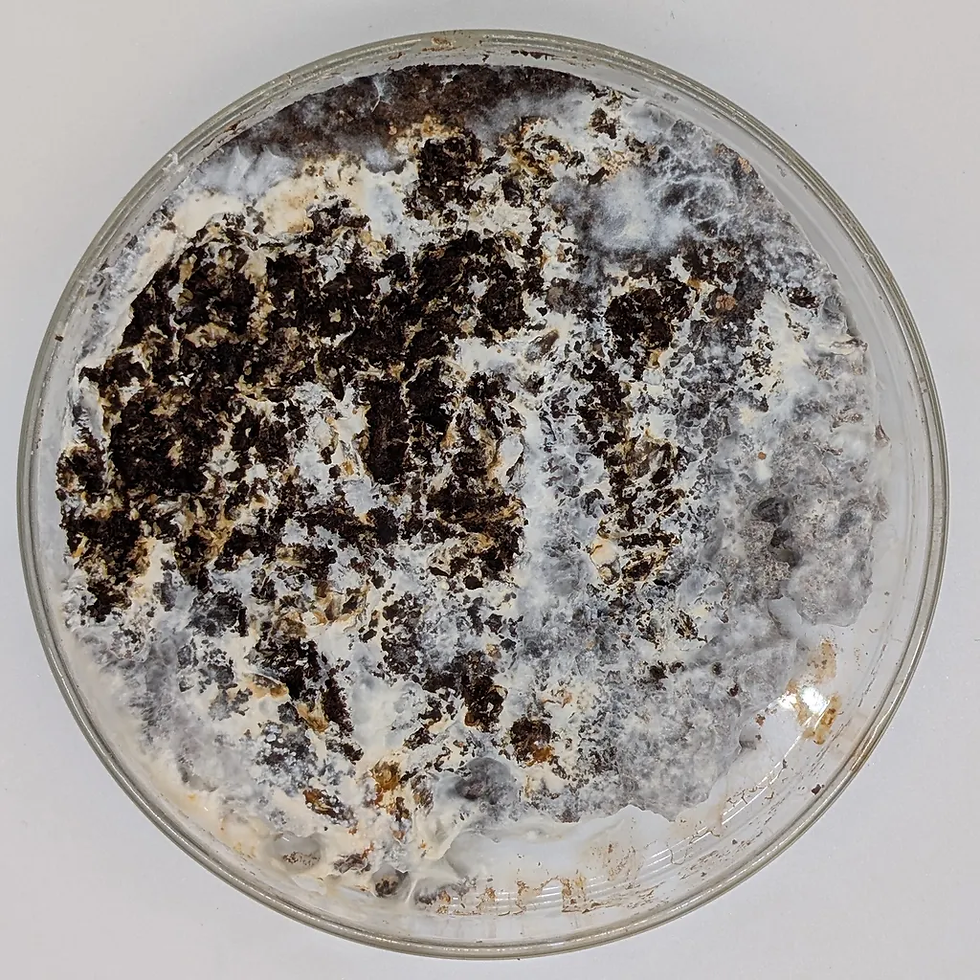
At the University of Vienna, researchers Alexander Bismarck and Mitchell Jones are cultivating fungi in petri dishes and plastic bags atop clay deliberately laced with rare earth elements. The concept, which they term mycomining, exploits fungi's natural capacity to accumulate these materials through their sprawling underground networks called mycelia: threadlike structures that function similarly to plant roots, absorbing nutrients and, in this case, valuable minerals.
Biological Mining at Scale
The principle behind mycomining builds on fungi's established role in bioremediation, where organisms break down or absorb pollutants from contaminated environments. Certain wild species, such as the king bolete, already accumulate rare earth elements naturally. Jones and Bismarck propose scaling this process to recover rare earths from industrially contaminated land, potentially using existing agricultural machinery to harvest the fungal biomass after several weeks of growth.

Once collected, the fungi could be processed into biogas and burned as fuel, with rare earths later separated from the resulting ash. However, the researchers acknowledge substantial limitations. Cerium concentrations in dissolved electronic waste can reach nearly 5,500 parts per billion, whilst fungi might accumulate only around 350 parts per billion: making this approach supplemental rather than primary.
Environmental considerations also warrant attention. Large-scale fungal cultivation could alter local biomes, raising ecological concerns that require careful assessment before deployment. Oona Snoeyenbos-West at the University of Arizona plans to address such challenges through a start-up focused on sourcing fungi from industrial sites, where organisms may have already adapted genetically to tolerate higher rare earth concentrations.
Waste as Resource
The mycomining concept aligns with broader efforts to rethink waste materials as resource repositories. Julie Klinger, an environmental studies professor at the University of Wisconsin-Madison, notes that looking at waste with fresh perspectives reveals different pictures of scarcity and abundance. A 2025 study found that critical minerals, including rare earths, already exist in substantial quantities within US waste piles.
Bridget Scanlon, a hydrogeologist at the University of Texas at Austin, estimates the value of rare earths in US coal ash piles alone at $8.4 billion. Approximately 30 million tonnes of red mud (bauxite processing waste) contains rare earths at concentrations 10 to 20 times higher than natural crustal levels. Companies like ElementUSA are developing acid and solvent extraction methods to recover gallium and scandium from such waste, with prototype plants scheduled for 2028.
Economic Viability and Dual Benefits
The fundamental challenge remains economic. Rare earths command lower prices than precious metals like platinum or gold, making recovery from waste historically more expensive than conventional mining. This explains why researchers pursuing fungi-based extraction, flash joule heating, and chemical processing all plan to harvest multiple materials alongside rare earths, biogas from fungi, carbon from coal ash, iron from red mud, to improve financial viability.
Yet if these approaches prove commercially sustainable, the benefits extend beyond domestic rare earth supply. Processing millions of tonnes of industrial waste currently sitting in expensive, environmentally problematic heaps could transform liabilities into assets. As Klinger observes, successful rare earth recovery from waste might create symbiosis between industrial and environmental interests: converting fungi from laboratory curiosities into industrial partners addressing both resource scarcity and contamination simultaneously.


