


Fungi Could Facilitate Growing Food on the Moon and Mars using Local Resources

A review published in Frontiers in Astronomy and Space Sciences argues that beneficial fungi could transform sterile lunar and Martian regolith into a viable substrate for growing crops, supporting future human settlements beyond Earth.
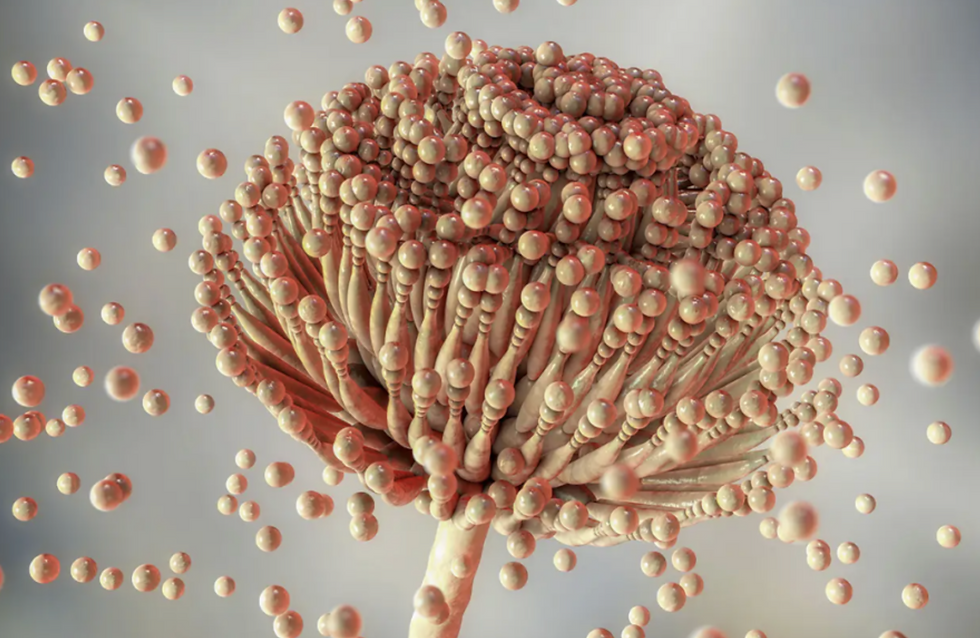
Fungi such as Trichoderma, Penicillium, Aspergillus, and arbuscular mycorrhizal species can solubilise phosphates, chelate toxic metals via siderophores, and improve soil structure, mechanisms well-documented on Earth that the authors propose could function similarly in off-world regolith.
With cargo delivery to low-Earth orbit estimated at roughly $20,000 per kilogram under NASA's interim pricing, the economic case for using locally available regolith, conditioned by fungi rather than imported substrates, is substantial.
Lunar and Martian regolith, the loose, unconsolidated surface material found on both bodies, presents a formidable barrier to crop production. Unlike even the poorest terrestrial soils, regolith contains no microbiota and almost no organic matter. Its chemistry is hostile: alkaline pH reduces the solubility of phosphorus and potassium; iron concentrations in Martian regolith reach 11.2 weight percent, far above what most crops can tolerate; and toxic perchlorates, chlorine-containing salts, have been detected in Martian soil at concentrations of 0.4 to 0.6 weight percent at the Phoenix landing site.

A Hostile Substrate With Hostile Chemistry
Despite obstacles, prior experiments have demonstrated that some plant species can indeed survive and even thrive in regolith simulants, which are materials that mimic the characteristics of lunar or Martian soil. Notable examples of these resilient species include tomatoes, rye, chickpeas, and lettuce. These plants have shown the remarkable ability to adapt to the challenging conditions presented by regolith, but this success is contingent upon the provision of supplemental treatment, which may include nutrient additions or controlled environmental conditions to support their growth. Consistently, however, researchers have found that microorganism-assisted conditioning is essential before meaningful crop yields become feasible. This involves the introduction of beneficial microbes that can enhance nutrient availability, improve soil structure, and promote plant health. It is this critical gap in knowledge and application that the new review, authored by Oliveira, Loureiro, Palmer, and Patreze at the Federal University of the State of Rio de Janeiro (UNIRIO), seeks to address.

Published in Frontiers in Astronomy and Space Sciences, the review places fungi at the center of the proposed solution, exploring how mycorrhizal fungi and other soil microorganisms can interact with plant roots to improve nutrient uptake and resilience in harsh growing conditions. The authors delve into the mechanisms by which these fungi form symbiotic relationships with plants, enhancing their ability to thrive in nutrient-poor environments typical of extraterrestrial surfaces. They also discuss the potential for these fungal partnerships to create a more sustainable agricultural framework for future space missions, where traditional farming methods may be impractical. By focusing on the role of fungi, the review aims to provide a comprehensive overview of current research and future directions in the field, ultimately paving the way for innovative approaches to food production in space exploration scenarios.
What Fungi Bring to Regolith
The review identifies several fungal mechanisms relevant to regolith conditioning. Phosphate solubilisation, in which species such as Aspergillus awamori, Fusarium circinatum, and Mucor circinelloides release organic acids that convert locked phosphorus into plant-accessible forms, is considered particularly important given the limited and chemically unavailable phosphorus in both lunar and Martian substrates.
Metal management is equally critical. Iron present in Martian regolith exists largely in insoluble oxide states. Siderophore-producing fungi, including Beauveria bassiana and Aspergillus nidulans, produce specialised molecules that chelate, or bind and solubilise, ferric iron, making it accessible to plants while reducing toxic concentrations. Trichoderma harzianum has demonstrated a 46 percent reduction in iron content in contaminated soil through secondary metabolites, according to studies cited by the authors. Penicillium simplicissimum has also been shown to extract metals including aluminium, iron, magnesium, and calcium from the lunar regolith simulant EAC-1A, recovering an average of 10 grams per litre of metal from leachate over two weeks, suggesting potential for in situ resource utilisation on actual lunar missions.

For perchlorate remediation, the review notes that the yeast Debaryomyces hansenii can tolerate perchlorate concentrations far above those detected on Mars, and that Penicillium species may convert perchlorates into molecular chloride and oxygen, potentially detoxifying Martian soil.

The authors also highlight arbuscular mycorrhizal fungi (AMF), from the phylum Glomeromycota, as particularly promising partners. In experiments using lunar regolith simulants, chickpea plants inoculated with AMF species including Rhizophagus intraradices and Funneliformis mosseae flowered, produced seeds, and showed elevated chlorophyll levels. AMF also produce glomalin, a glycoprotein that binds heavy metals and improves soil aggregate structure, properties directly relevant to the low-cohesion, metal-rich character of regolith.
Significant Gaps Remain
The review is candid about what is not yet known. Critically, almost no experimental work has examined fungi interacting directly with regolith under space-relevant physical conditions, including microgravity, cosmic radiation, and extreme temperature variation. The authors identify biosafety as a serious concern: several genera highlighted for their beneficial properties, including Aspergillus and Trichoderma, contain strains capable of causing disease in plants, animals, or immunocompromised humans. Aspergillus fumigatus, detected on the International Space Station, can cause severe invasive infections. Rigorous strain selection and containment protocols are described as essential prerequisites.

The authors call for an integrated research programme combining fungal screening in high-fidelity regolith simulants, multi-generational plant growth trials, and progressive introduction of extraterrestrial physical conditions, as the field moves from theoretical promise toward experimental validation.


