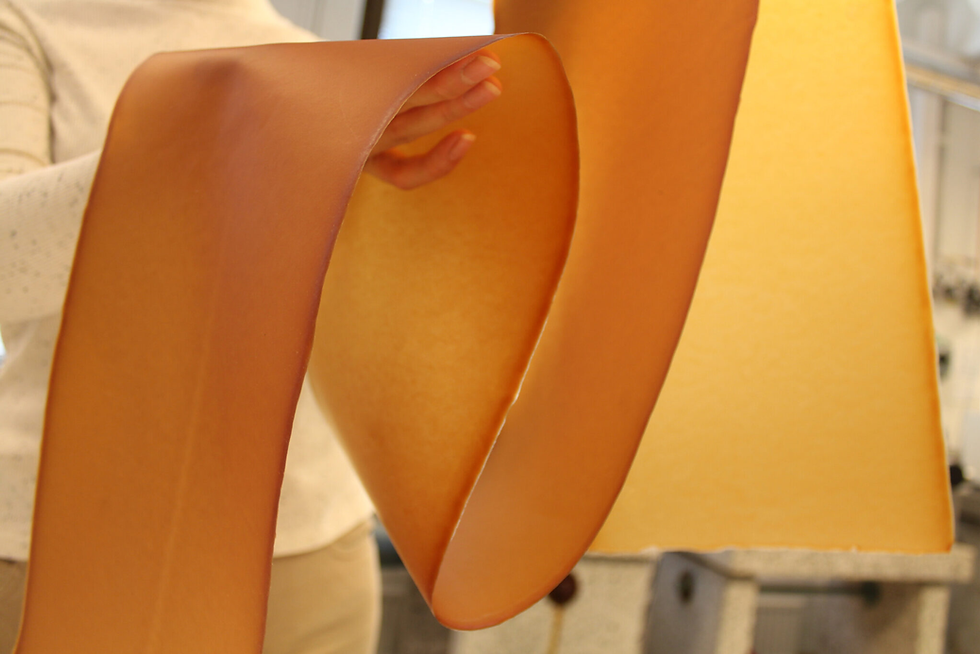
Kenyan Startup Turns Agricultural Waste Into Affordable Housing Mycelium Panels

Nairobi-based MycoTile, founded by inventor Mtamu Kililo, now produces approximately 3,000 m² of mycelium-based construction panels per month, using around 250 tonnes of agricultural waste annually.
Mycelium binds agricultural fibres into dense, compact panels without relying on conventional construction materials such as cement or synthetic insulation.
With Nairobi facing a housing deficit of at least 2 million units, panels priced at roughly two-thirds the cost of standard materials could meaningfully reduce the barrier to affordable construction.
Mtamu Kililo first encountered mycelium building materials during a research fellowship in Kigali, Rwanda, where he noticed that the substrate left over from mushroom cultivation resembled small bricks. Back in Nairobi, he began growing fungi in his pantry and heating experimental blocks in his kitchen oven. That domestic experiment has since become MycoTile, a company now operating out of the Kenya Industrial Research and Development Institute, capable of supplying panels for walls, roofing, and interior insulation at industrial scale.

From Kitchen Experiment to Industrial Production
MycoTile collects agricultural residues, primarily from sugar-producing areas in western Kenya, and pasteurises them before introducing the mycelium compound. The mycelium, which is the dense filament network that forms the root system of a fungus, grows through the treated fibres and binds them into a compact mass. The resulting panels go through drying and quality-control stages before use. The Kenya Industrial Research and Development Institute provides facilities and equipment, and production has reached roughly 3,000 m² of panels per month, processing around 250 tonnes of agricultural residues annually. Material that might otherwise add pressure on rural waste-disposal systems is thus repurposed as a structural input.
The Cost Case for Mycelium Panels
Kililo states that MycoTile's insulation panels cost approximately two-thirds the price of comparable conventional materials. In practical terms, using the panels can reduce the overall cost of a brick-and-mortar build by around a third, according to his estimate. One case study illustrates the scale of the saving: street vendor Jedidah Murugi used MycoTile panels to construct a 15 m² housing unit, spending roughly 26,880 Kenyan shillings, equivalent to approximately US$208, on the panels alone. She reported that the interior remained neither cold at night nor excessively hot during the day, suggesting that the panels perform a useful thermal insulation function. That said, the source does not provide laboratory measurements of thermal conductivity or comparative performance data; Murugi's account is a practical observation rather than a controlled technical assessment.

For context, a simple one-bedroom unit in Nairobi built with bricks, wood, and metal sheets can cost up to 150,000 Kenyan shillings, around US$1,000, and potentially double that depending on finish quality. Nairobi's housing deficit is estimated at a minimum of 2 million units across a city of more than 5 million people, with a large share of residents either renting or building incrementally over many years.
Climate Credentials and Outstanding Questions
Kililo describes the panels as biodegradable and lower in carbon footprint than conventional equivalents. Architect Nickson Otieno noted that the construction industry is among the largest sources of emissions, and that replacing traditional materials with biologically sourced components could reduce the embodied carbon in buildings, provided production, transport, and disposal are all factored in. Kenyan authorities have begun developing a national decarbonisation plan for construction, and supporting MycoTile forms part of that strategy. MycoTile is not alone in this space; mycelium-based construction projects have been completed elsewhere in Africa, and researchers at institutions including NASA have explored similar materials for structural applications.

Significant questions remain, however. The source provides no detailed data on long-term durability, fire resistance, moisture behaviour, or panel lifespan across different climatic conditions. These are not incidental concerns; materials intended for residential walls and roofs must demonstrate sustained performance and meet technical safety standards before they can be adopted at scale or incorporated into formal housing programmes. MycoTile's production volumes confirm commercial viability at an early stage, but independent technical verification will be essential to wider adoption.