Fungal Clothing: Cordyceps Mushroom based Textile Grows, Repairs, and Biodegrades

Researchers at the Chinese Academy of Sciences have created a self-repairing, living textile from the fungus Cordyceps militaris, capable of regrowing over damaged areas when supplied with fresh fungal material.
The fabric is built entirely from interwoven fungal filaments called hyphae, with colour, water repellency, and UV protection added by introducing engineered yeast and other fungal species directly into the living material.
The textile biodegrades almost completely in soil within roughly 40 days, offering a potential alternative to synthetic fabrics that persist in the environment for decades.
A Parasitic Fungus Finds a New Role
Cordyceps militaris is best known as a parasitic fungus that infects insects, particularly caterpillars, and has gained a degree of cultural notoriety as the fictional inspiration behind the zombie-fungus premise of the video game and television series The Last of Us. In reality, it poses no threat to humans. What it does possess is a remarkably dense, interwoven network of microscopic filaments, called hyphae, which a team led by Ke Li at the Chinese Academy of Sciences has now turned into the structural basis of a living garment.
The research, published in Science Advances, represents a departure from most mycelium-based materials currently in development, which typically kill and dry the fungal biomass before use. Li's team kept the organism alive, and that choice is the defining feature of what the material can do.
Building a Fabric From the Fungus Up
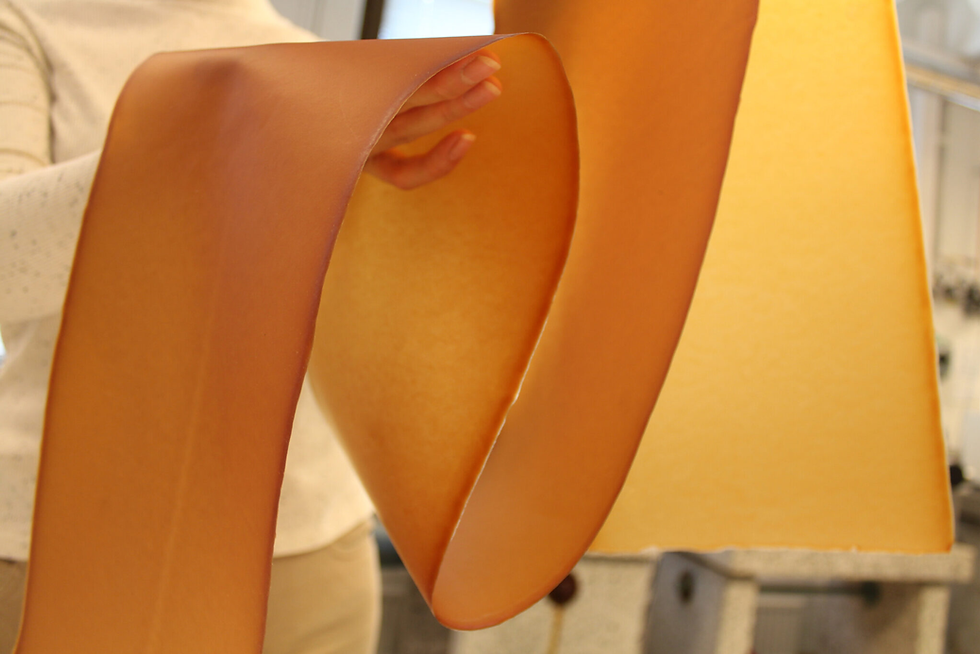
The fabrication process begins in liquid culture, where Cordyceps militaris is grown into small, spherical pellets. These pellets are then washed and transferred into moulds, where the hyphae from neighbouring pellets intertwine and consolidate into a continuous, self-supporting sheet. No conventional fabric, polymer mesh, or external scaffold is used at any stage. The fungal architecture holds itself together.

In its natural state, the resulting sheet is rigid. To make it wearable, the team soaked it in glycerol, a compound that acts as a plasticiser, softening the structure and restoring flexibility without killing the living cells within. The finished material feels denser and less fibrous than cotton, according to Li, and closer in texture to a soft, non-woven sheet or a flexible leather-like material. On the question of smell, Li notes that washing, drying, and post-treatment can substantially reduce the faint biological or fermentation-related odour present in freshly prepared samples.
Colour is introduced biologically rather than through synthetic dyes. The team incorporated yeast cells engineered to produce orange, blue, and purple pigments, which are applied directly to the fungal sheet so the colour is generated within the living material itself. This approach is notable given the pressure mounting on the synthetic dye industry to find cleaner alternatives.
Programming Properties Into Living Material
The most technically striking aspect of the work is the ability to programme specific functional properties into the textile by introducing additional microbial species.

Water repellency, for example, can be conferred by adding certain other fungi to the material's surface, causing it to shed water droplets rather than absorb them. UV protection is achieved by introducing Aspergillus niger, a common mould familiar from spoiled fruit and vegetables. This species forms a dark surface layer containing melanin, a pigment that absorbs ultraviolet radiation, effectively building sun protection into the fabric at the biological level.
Self-repair works through the same principle of latent biological activity. If the textile is torn or breached, fresh wet fungal pellets can be applied to the damaged area. Given adequate moisture and nutrients, the fungus simply grows over the damage, restoring structural continuity. Under dry conditions, the biological activity within the material largely halts, with cells becoming dormant. Introduce humidity and nutrients, and that activity can resume. It is this on-off biological capacity that underpins the repair mechanism, and also the material's biodegradable properties, with near-complete visible degradation observed in soil after just over 40 days.

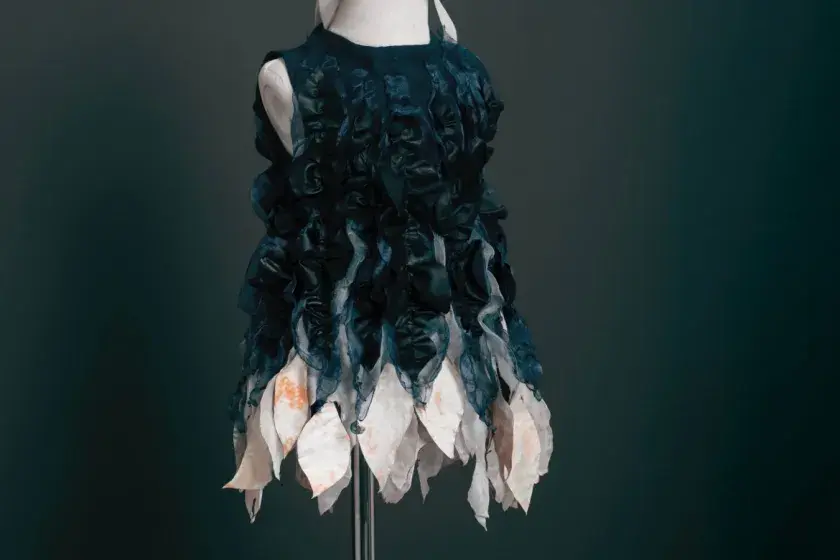
The team demonstrated the material's potential by constructing a dress. No one has worn it yet; Li describes it as a precious display piece, made in a small size, and notes that testing it in motion on a human wearer remains a future ambition.
Limitations and the Road Ahead
The appeal of a rapidly biodegradable textile is obvious in the context of fast fashion, a sector that generates enormous volumes of persistent synthetic waste. Justin Beardsley at the University of Sydney has highlighted the biodegradability as a genuine advance. But he also identifies the central tension: a material that degrades readily in soil could, under the wrong conditions, begin to degrade while being worn. Managing the boundary between desired biological activity and undesired biological activity, particularly in the warm, humid microenvironment next to human skin, remains an unresolved challenge.

The vision Beardsley articulates for the technology's future is an appealing one: a garment that could switch between water-repellent and breathable states in real time, responding to environmental conditions. That kind of dynamic, programmable functionality is not yet possible, and the path from a laboratory dress to a commercially viable, wearable product involves substantial engineering, safety, and scaling challenges that the current research does not address.
What the work does establish is a proof of concept with unusual breadth. A single material platform that can, in principle, self-colour, self-repair, resist UV radiation, repel water, and decompose completely at end of life represents a compelling design space for the textiles industry to explore, even if the practical road from laboratory fungal pellets to a wardrobe staple remains long.