ETH Zürich, EMPA and EPFL Review Maps How Food Waste Proteins Could Underpin a Circular Materials Economy

A review published in Nature Reviews Materials by researchers at ETH Zürich, EPFL, and Empa outlines how proteins recovered from food waste, including via fungal bioconversion of carbohydrate-rich residues, can serve as feedstocks for bioplastics, water purification membranes, CO₂ capture sorbents, and renewable energy devices.
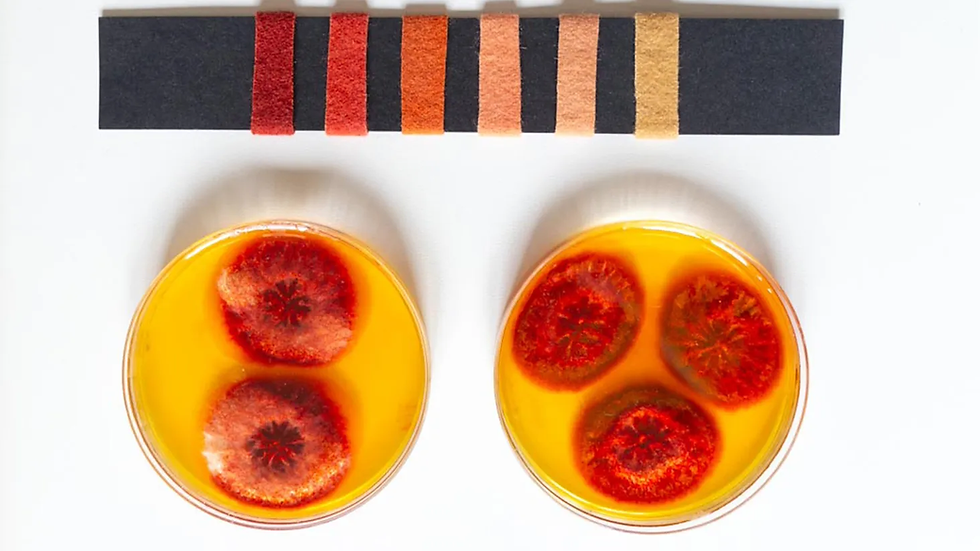
White-rot fungi such as Ganoderma lucidum and Ganoderma adspersum, grown on waste substrates, secrete functional proteins including class I hydrophobins, laccases, and lectins, whose yields can be tuned by adjusting the carbon-to-nitrogen ratio of the growth medium.
Redirecting protein-rich industrial side streams into materials rather than low-value animal feed or wastewater could reduce global CO₂ emissions by an estimated 1.6 to 3.4 gigatonnes per year, according to modelling cited in the review.
Food Waste as a Protein Feedstock
The global food system discards roughly one-third of all food produced, a figure that accounts for an estimated 8 to 10 percent of total greenhouse gas emissions, equivalent to 4 to 5 gigatonnes of CO₂ per year. Embedded within that waste is more than 300 million tonnes of protein annually, most of which is diverted to animal feed or landfill, capturing almost none of its structural or chemical potential.

The review published in Nature Reviews Materials, led by Raffaele Mezzenga and Francesco Stellacci at ETH Zürich and EPFL respectively, maps a hierarchy of valorisation routes that could transform this discarded biomass into functional materials. The authors distinguish between low-grade crude protein fractions, suitable for bioplastic films and packaging composites, and high-grade purified proteins, which can be assembled into amyloid fibrils, the self-organised cross-β-sheet nanostructures that underpin several advanced applications. Amyloid fibrils are not the pathological deposits associated with neurodegenerative disease; rather, they are structurally similar nanoscale fibres assembled in controlled laboratory conditions from food-derived proteins such as β-lactoglobulin, the major protein in dairy whey, and soy protein concentrates derived from tofu wastewater.
A life cycle scenario modelled for Switzerland illustrates the scale of the opportunity. Replacing the country's 39,000 tonnes of petroleum-based food packaging with bioplastics derived from soy and dairy whey side streams could reduce global warming potential by approximately 22 percent and terrestrial ecotoxicity potential by approximately 25 percent compared with the baseline, while agricultural land occupation would increase by around 36 percent, a trade-off the authors flag as requiring further scrutiny.
The Fungal Conversion Route
A complementary pathway involves cultivating white-rot fungi directly on carbohydrate-rich food waste, effectively using the fungi as biological converters that digest low-value residues and secrete high-value proteins. The review describes three protein families of particular interest.

Class I hydrophobins are small amphiphilic proteins, roughly 7 to 20 kilodaltons in molecular weight, that self-assemble at interfaces into rodlet films resistant to detergents, proteases, and organic solvents. When Ganoderma lucidum was grown on cottonseed shell and wheat bran at a carbon-to-nitrogen ratio of approximately 50:1, expression of the hydrophobin gene hyd1 was substantially higher than under standard defined media conditions. Ganoderma adspersum grown on apple-derived media with yeast extract supplementation yielded 16.4 milligrams per litre of class I hydrophobin. These proteins are useful as biosensors, emulsifiers, and functional coatings; a fusion of hydrophobin Vmh2 with green fluorescent protein produced a thrombin biosensor with a detection limit of 2.27 attomolar, outperforming benchmark electrochemical and optical sensors.
Laccases, multicopper oxidase enzymes produced by the same fungi, reached activities of up to 42,000 units per litre on food-waste media. Lectins, biorecognition proteins with specificity for cell-surface carbohydrates, reached titres of 10⁷ units per milligram in cultures of Pleurotus ostreatus grown on wheat straw. All three protein types can be harvested without recombinant genetic engineering, keeping the production route relatively simple.
This fungal route is directly relevant to the broader opportunity for fungal fermentation to transform agricultural and food waste into functional ingredients, and it connects to established work on mycelium-based packaging materials that have already reached commercial deployment.
From Bioplastics to CO₂ Capture
The review surveys the technology readiness of protein-based materials across a wide range of applications. Mycelium-based packaging composites, grown on spent coffee grounds and waste cereals, have reached commercial deployment and carry an embodied carbon footprint of negative 39 kilograms of CO₂-equivalent per cubic metre, compared with positive 224 kilograms for expanded polystyrene. Amyloid fibril-based water purification membranes, derived from β-lactoglobulin, have also been commercialised, removing heavy metals, radionuclides, and viral particles with efficiencies above 99.8 percent.

CO₂ capture sorbents based on aminosilane-functionalised amyloid fibrils, and a novel room-temperature regeneration system using KOH-loaded whey protein isolate gels, represent earlier-stage developments at technology readiness levels 3 to 4. The CO₂ uptake of solid protein-based sorbents has increased a hundredfold over the past 15 years, from 0.02 to approximately 2 millimoles per gram.
The authors also describe a closed-loop molecular recycling framework, nature-inspired circular-economy recycling (NaCRe), in which protein waste is enzymatically broken into its constituent amino acids and reassembled into entirely new proteins with different sequences and functions, demonstrating true upcycling rather than simple reuse.
Limitations and the Road Ahead
The review is candid about the obstacles remaining. Feedstock variability, perishability, and seasonal availability complicate industrial scale-up. Most life cycle assessment data rely on laboratory-scale fabrication, and prospective modelling of industrial production introduces substantial uncertainty. The safety of amyloid fibril-based materials across full life cycles remains an open question; whilst food-derived fibrils showed reduced immunogenicity in cell-line and mouse studies, non-gastrointestinal exposure pathways in animal models raised concerns relevant to biomedical applications.
The review also cautions against lock-in: diverting protein side streams to materials production must be weighed against competing valorisation routes, including animal feed, biogas, and human nutrition, using multicriteria decision analysis rather than assuming materials use is inherently superior. The authors call for standardised extraction protocols, open life cycle data sharing, and improvements in cell-free protein synthesis efficiency before molecular recycling can move beyond proof of concept.