


C16 Biosciences Launches Yeast-based Cocoa Butter as Chocolate Industry Faces Supply Crisis

New York-based C16 Biosciences has launched a precision-fermented cocoa butter equivalent under its Palmless brand, marking the startup's first entry into food ingredients after establishing itself in sustainable beauty.
The ingredient uses aerobic precision fermentation with naturally oleaginous yeast strains, delivering tighter triglyceride distribution that produces a more consistent solid fat curve and wider tempering window than conventional cocoa butter.
With cocoa butter costs reported to have risen sixfold in 2025 and extreme weather threatening a third of the world's cocoa trees, a fermentation-derived alternative offers chocolate manufacturers a route to stable supply and predictable pricing.
C16 Biosciences, the New York-based biotech startup behind the Palmless brand, has expanded beyond beauty and personal care to launch its first food ingredient: a precision-fermented cocoa butter equivalent. The announcement, made in August 2026, also included three new yeast-derived ingredients for the beauty industry, broadening what the company describes as a commercially available multi-ingredient portfolio produced at scale in 50,000-litre fermentation tanks at its New York facility.

Cocoa Butter's Supply Problem
The timing of C16 Biosciences' food ingredient launch reflects a genuine crisis in the chocolate supply chain. Cocoa prices have risen sharply in recent years, driven by extreme weather events damaging harvests and reportedly pushing a third of the world's cocoa trees towards extinction. Cocoa butter, an essential fat found in all types of chocolate, has reportedly seen its cost rise sixfold in 2025 alone. Beyond price volatility, the ingredient presents persistent functional challenges: because cocoa butter's composition varies by bean origin, growing season, and harvest, manufacturers must contend with unpredictable tempering curves, fat bloom that compromises shelf life and appearance, and structural defects during production.
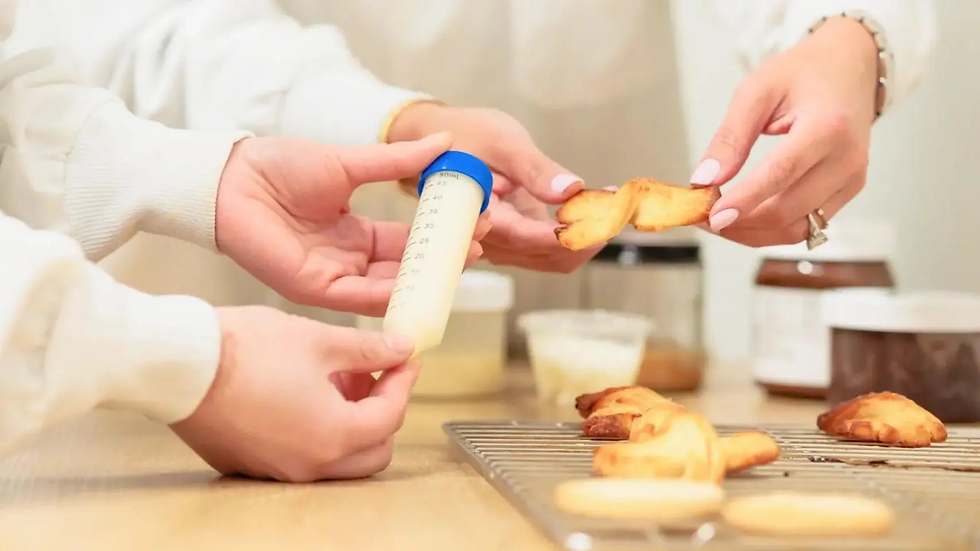
C16 Biosciences argues that precision fermentation addresses these problems at their source. Its platform puts a naturally oleaginous parent yeast strain through process condition optimisation and adaptive laboratory evolution to produce lipids with high purity and consistent composition. The result, the company says, is a tighter triglyceride distribution that yields a more predictable solid fat curve, a wider tempering window for chocolate makers, and a lower risk of fat bloom. Because the process is decoupled from cocoa agriculture, it also insulates manufacturers from harvest-driven supply shocks and price volatility. Multiple multinational food manufacturers are already reportedly using the ingredient for product development, according to the company.
Co-founder and CEO Shara Ticku described cocoa butter as responsible for chocolate's snap on first bite, its ability to melt at body temperature, and its smooth finish. Ticku stated that C16 Biosciences has replicated those sensorial properties through fermentation rather than industrial agriculture, delivering results that are, in the company's assessment, more consistent and more aligned with the specific needs of chocolate manufacturers.
A Crowded but Early Market

C16 Biosciences is not alone in pursuing fermentation-derived cocoa butter alternatives. Planet A Foods, Terra Oleo, and Sun Bear Biofuture are each applying precision fermentation to the same challenge. Smey is combining artificial intelligence with yeast fermentation, while Abydos Bioscience is working with oleaginous bacteria. Celleste Bio has taken a different route, using plant cell culture technology; its ingredient has already been used in milk chocolate bars produced by Mondelēz International. The field is active, but none of these approaches has yet achieved commodity-scale adoption, and the competitive landscape remains fluid. Fermentation is also reshaping adjacent ingredient categories, from natural dyes to flavour compounds, as brands seek alternatives to agriculturally constrained inputs.
Expanding the Beauty Portfolio
Alongside the cocoa butter launch, C16 Biosciences unveiled three new ingredients under its Palmless platform for the personal care market, joining Torula Oil, which is already used in products by Tower 28 Beauty, Estée Lauder, and Haeckels. TorulaSilk offers a broad fatty acid profile spanning C8 to C24, combining lightweight spreadability with conditioning properties and functioning as an alternative to D5 and D6 silicones. Torula Butter is designed to condition skin while melting at skin temperature, and contains naturally occurring sterols the company says support the skin barrier. The Torula Carotenoid Complex draws on fungal-specific carotenoids, including torulene, torularhodin, and beta-carotene, targeting antioxidant defence and replenishment of skin molecules depleted by UV exposure.
Co-founder and COO David Heller described the expansion as evidence that Palmless is "not a single ingredient story," noting that the company has scaled its technology and now offers manufacturers a commercially available toolkit spanning actives, emollients, and butters. The company reports production capacity at its New York facility that is, in its own characterisation, orders of magnitude above other precision fermentation firms operating across food and beauty. Other yeast-derived fat platforms have faced the scaling challenge as the primary bottleneck; C16 Biosciences' claim of hundreds of tonnes annually from existing infrastructure is notable, though independent verification of production volumes has not been provided in the available sources.


