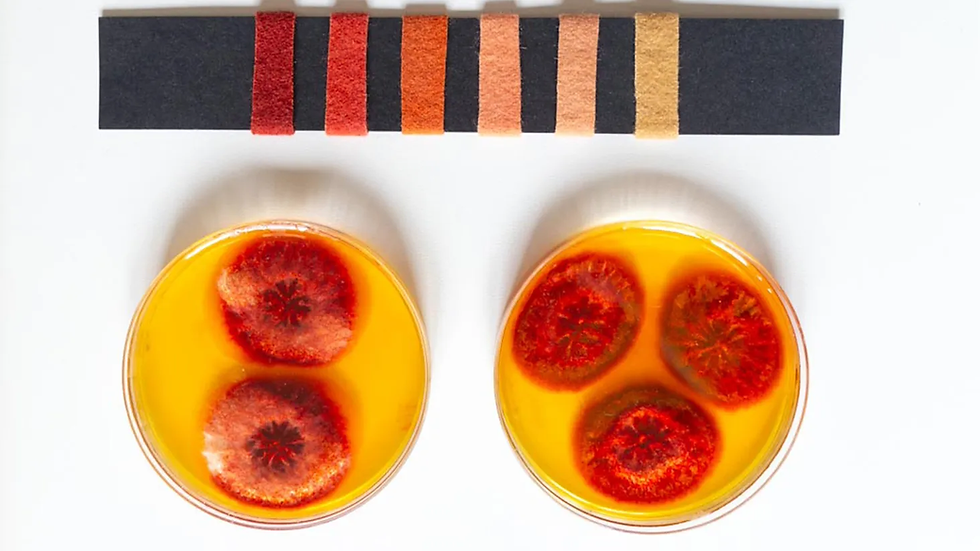
Leiden University's FungCows Project Bets on a Novel Fungus to Replace Dairy Casein

A €1.3 million Dutch grant is funding research into using a previously untested fungus to produce casein, the key milk protein behind cheesemaking.
The fungus can grow on grass, potentially offering a cheaper and more land-efficient production route than conventional precision fermentation.
Commercial cheese made using this approach remains at least four years away, but the project could reshape how animal-free dairy proteins are produced.
Casein is the protein that makes cheese behave like cheese. It gives mozzarella its stretch, brie its texture, and cheddar its bite. For food scientists trying to produce dairy without cows, casein is both the prize and the puzzle.
Unfamiliar Solution for a Familiar Problem
Precision fermentation, a process in which microorganisms are reprogrammed to produce specific proteins, has already demonstrated that casein can be made without a single cow in sight. Several companies are racing to bring animal-free casein to market using this approach. The question the FungCows consortium is now asking is whether there is a better organism for the job.

Funded with €1.3 million (approximately US$1.5 million) from the Dutch Research Council's National Growth Fund for Cellular Agriculture and the Dutch Cellular Agriculture Foundation, the FungCows project, short for Fungal Cell Factories for generation of cow-free products, brings together Leiden University and several Dutch research and industry partners. Their shared objective is to engineer an undisclosed fungal species to produce casein proteins reliably and efficiently enough to one day underpin a commercial cheese product.
Engineering a New Fungal Host
The science at the heart of FungCows is conceptually straightforward, even if the execution is not. Caseins are not naturally produced by the fungus under study. Researchers plan to introduce the relevant genetic instructions into the organism, essentially giving it the blueprints to manufacture proteins it would otherwise never make. Once the fungus can produce casein, the team's work shifts to optimising how much it makes and how consistently.
Arthur Ram, Professor of Fungal Genetics and Biotechnology at Leiden and the project's principal investigator, brings more than 25 years of experience working with model fungal species to the effort. He has described discovering and developing a new fungal host as a considerable scientific challenge, one that requires building genetic and fermentation tools largely from scratch.

The genetic engineering work is being carried out with biotech firm Bioscienz, while Avans University of Applied Sciences is applying bioinformatics, the use of computational methods to analyse biological data, to understand how the organism responds to producing animal proteins.
HAN University of Applied Sciences is responsible for optimising the fermentation conditions, selecting the right growth media and bioreactor settings to support strong yields. Biotechnology Fermentation Facility is handling scale-up, with the longer-term ambition of enabling Those Vegan Cowboys, the Dutch food company known for its animal-free dairy ambitions, to bring a resulting cheese product to consumers.
Grass as a Competitive Advantage
What distinguishes this project from other precision fermentation approaches to dairy alternatives is less the end product than the inputs. The fungus being studied can, the consortium claims, grow on grass as a carbon source. Carbon sources are the nutrients that microorganisms consume to fuel their growth and protein production. Most established fungal platforms rely on more refined and costly feedstocks such as glucose derived from crops. If grass can serve as an adequate substitute, feedstock costs could fall considerably, addressing one of the more stubborn economic barriers in precision fermentation.

Ram has also pointed to the environmental dimension. Dairy farming requires substantial land, water, and feed, and produces significant greenhouse gas emissions. The consortium argues that fungal casein production could carry a meaningfully smaller carbon footprint. It could also, in principle, make use of marginal land where grass grows but intensive agriculture is not viable, reducing direct competition with food crops.
None of this will happen quickly. The team estimates it will be at least four years before a cheese made using this fungus is ready for public tasting, let alone supermarket shelves. Substantial laboratory work remains, and reaching commercially relevant protein yields from an untested organism is a genuinely difficult task.
Still, FungCows represents a considered bet on an underexplored corner of fungal biotechnology. If the approach delivers, it may offer the dairy alternatives sector a production route that is both cheaper and more sustainable than what currently exists.