Entomopathogenic Fungi Are Reshaping Pest Control: lmproving Kill Rates while Reducing Chemical Inputs.

Entomopathogenic fungi can be combined with chemical pesticides, plant-based compounds, and nanotechnology to significantly improve pest kill rates while reducing chemical inputs.
Certain fungi colonise plants as endophytes, triggering long-lasting natural defences against insects without direct application to pests.
Despite proven laboratory results, fungal pesticides still represent only around 17% of the global biological pesticide market, held back by environmental sensitivity and production costs.
Chemical pesticides have underpinned modern agriculture for decades, but their legacy is increasingly difficult to defend. Resistance is spreading, soil and waterway contamination is worsening, and non-target species, from bees to fish, face mounting collateral damage. A comprehensive review published in Biological Control by researchers at Yunnan Agricultural University offers a timely survey of how entomopathogenic fungi (EPFs), meaning fungi that infect and kill insects, are being developed into a credible alternative. The picture that emerges is one of genuine scientific momentum, tempered by practical obstacles that remain stubbornly in place.
Combining Forces: Fungi Alongside Chemicals and Botanicals
One of the review's central arguments is that EPFs work best not in isolation but in combination. Pairing them with reduced doses of chemical insecticides can produce synergistic effects, where the outcome exceeds what either agent achieves alone. Neonicotinoids such as imidacloprid, for instance, stress insects by disrupting feeding, weaken their outer cuticle, and alter the local chemistry in ways that ease fungal penetration. The result is faster kill rates at lower chemical doses.

Plant-derived pesticides offer a more sustainable pairing. Combinations of Beauveria bassiana with extracts from plants such as Withania somnifera achieved larval mortality rates of up to 99.25% for fall armyworm under semi-field conditions. Natural pyrethrins, which rapidly paralyse insects, similarly assist fungal entry by disabling the host before it can mount a defence. Dosage calibration matters considerably here: azadirachtin, a neem-derived compound, becomes harmful to the fungus itself at concentrations above 5 mg/L, illustrating that synergy requires careful management rather than simple mixing.
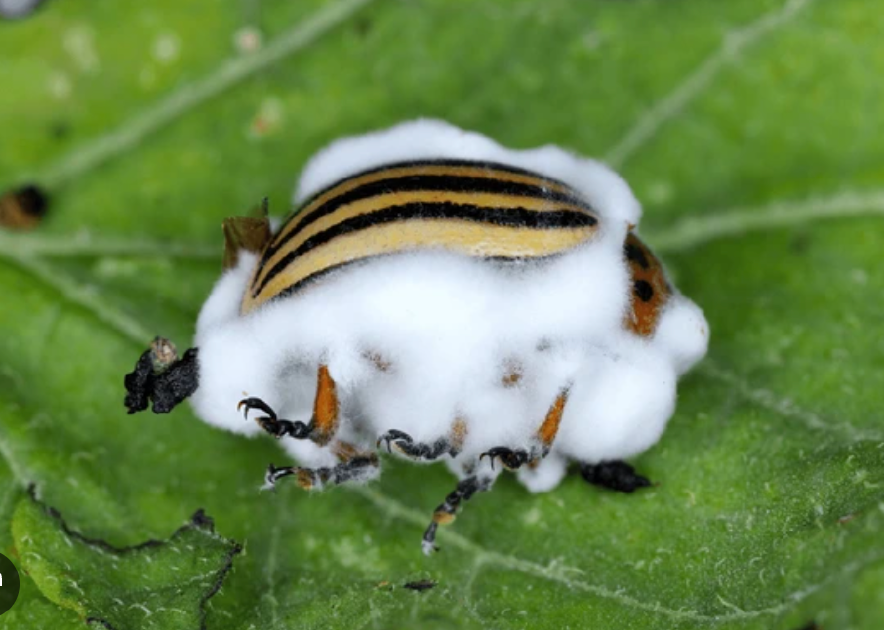
Combining EPFs with other biological agents, including parasitic wasps, predatory mites, and bacteria such as Bacillus thuringiensis, adds further layers of control. The parasitic wasp Telenomus remus, for example, provides a physical infection route for B. bassiana through its egg-laying behaviour, and lower spore concentrations have little impact on the wasp's emergence, making the pairing practically feasible. This kind of multi-organism pest management strategy reflects a broader shift in thinking about biological control.
Nanotechnology and Secondary Metabolites Open New Avenues
Perhaps the most technically striking section of the review concerns nanotechnology. Metal nanoparticles, when combined with EPFs, can disrupt insect detoxification enzymes while simultaneously boosting fungal spore production. Silver nanoparticles synthesised using Trichoderma harzianum achieved 100% mortality in third- and fourth-instar dengue mosquito larvae. Graphene oxide encapsulation of B. bassiana conidia, the reproductive spores, substantially improved their tolerance to heat and ultraviolet radiation, two of the main reasons fungal preparations fail in the field.

Nano-carrier delivery of RNA interference, a technique that silences specific insect genes, pushed the mortality rate of a thrips pest to 91.1% in one study. These approaches remain at the research frontier, and their mechanisms are not yet fully understood, but they indicate that the efficiency gap between fungal and chemical pesticides may be narrowing.
Secondary metabolites, the chemical compounds fungi produce during growth, represent a parallel avenue. Squalene isolated from Metarhizium rileyi achieved 90% mortality in Spodoptera litura. Clonostachys rosea alone has been reported to produce at least 229 distinct secondary metabolites, suggesting a largely untapped reservoir of potential biopesticide compounds.
Endophytic Properties and the Shift Towards Prevention
The review highlights an underexplored dimension of EPF biology: their capacity to live inside plants as endophytes without causing disease. Once colonised, plants produce repellent volatile compounds and other defensive metabolites that deter herbivorous insects over extended periods. Foliar spraying of B. bassiana achieved colonisation rates of 100% in leaves, 80% in stems, and 60% in roots within seven days, reducing fall armyworm survival, reproductive capacity, and adult lifespan. This shifts the role of EPFs from reactive insecticide to something closer to a plant immune primer.
Fungal pesticides currently account for only 16.7 to 18% of the global biological pesticide market, constrained by environmental sensitivity, inconsistent field performance, and regulatory complexity. Yet as fungal materials science and biotechnology converge, the tools available to improve EPF stability and efficacy are multiplying. The Yunnan review makes clear that the science is advancing; translating it from laboratory to field at commercial scale remains the defining challenge.