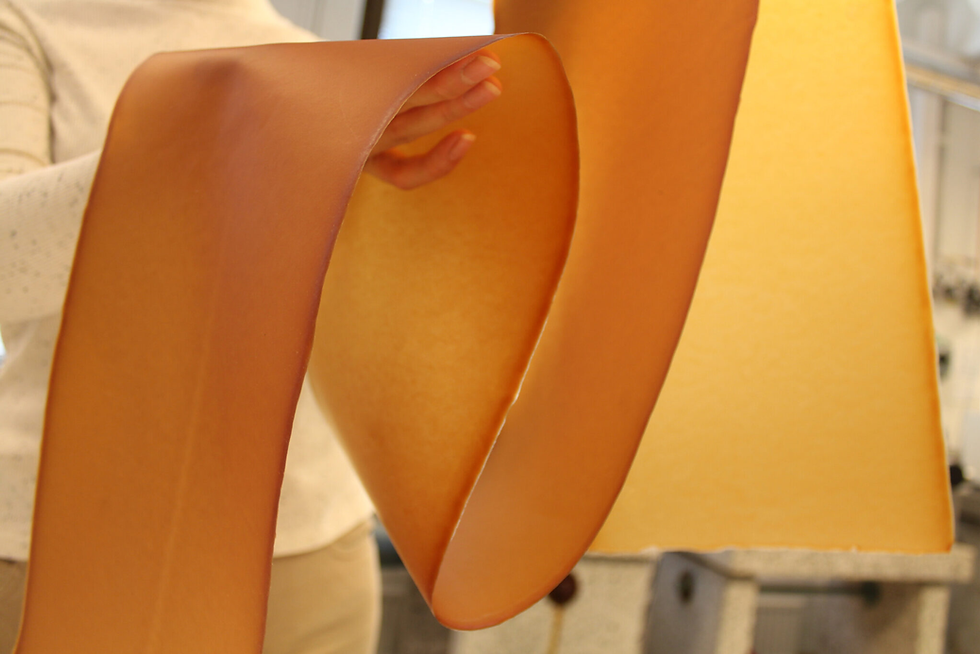
Researchers Turn Reishi Mushroom Chitosan Into Next-Generation Wound Dressings

Fungal-derived sacchachitosan, extracted from the medicinal mushroom Ganoderma lucidum, offers a sustainable and shellfish-free alternative to conventional chitosan for wound care applications.
Films combining sacchachitosan, gelatin, and silver nanoparticles demonstrated strong antimicrobial activity against both bacteria and fungi, while maintaining acceptable cell compatibility at optimised concentrations.
The research points toward a viable path for producing bioactive, biodegradable wound dressings from fungal biomass, with potential relevance for chronic wound management in diabetic patients.
Chronic wounds impose a growing burden on healthcare systems worldwide, with the global advanced wound care market projected to exceed USD 30–40 billion by 2030, driven by rising rates of diabetes, ageing populations, and surgical complications. Conventional dressings, from gauze to synthetic polymer films, often lack intrinsic antimicrobial properties, rely on petroleum-derived materials, or raise concerns about long-term biocompatibility. Researchers at St. Joseph's University in Bengaluru, working in collaboration with the Dr. RK Diabetic Foot and Podiatry Institute in Chennai, have taken a different approach, turning to Ganoderma lucidum, a well-studied medicinal mushroom, as the basis for a new class of wound dressing material.
From Mushroom to Biopolymer
The study, published in Biochemistry and Biophysics Reports in 2026, centres on sacchachitosan, a chitosan-like polymer extracted from fungal cell walls rather than crustacean shells. Chitosan, the more familiar compound, is typically derived from shrimp or crab shells and requires intensive acid treatment to remove calcium carbonate. Fungal biomass contains far lower levels of inorganic minerals, making the extraction process milder and reducing both chemical consumption and the risk of shellfish-related allergens.

The team extracted sacchachitosan from dried G. lucidum through sequential deproteinisation, bleaching, and deacetylation steps, achieving a sacchachitin yield of 41% relative to dried mushroom biomass. The resulting sacchachitosan showed a degree of deacetylation of 63.48% and a crystallinity index of 90.76%, indicating a highly ordered semi-crystalline structure. Notably, X-ray diffraction analysis revealed a diffraction peak at 30.8 degrees, a feature observed in certain fungal-derived chitosans but absent in prawn-shell variants, suggesting distinct structural characteristics with potential implications for film flexibility and bioadhesion. The broader potential of mushroom-derived chitosan as a sustainable biomaterial has been attracting attention across several fields beyond wound care.
Building the Films
The research team fabricated seven transdermal film formulations, labelled SF1 through SF7, by combining sacchachitosan with gelatin and glycerol, then incorporating increasing concentrations of silver nanoparticles. The nanoparticles themselves were synthesised using G. lucidum extract, a green synthesis approach that avoids toxic reducing agents and instead exploits the fungal polysaccharides and proteins to reduce and stabilise silver ions. This approach is consistent with broader interest in fungal compounds as versatile bioactive agents, even where the application lies outside medicine in the conventional sense.

The films were smooth, semi-transparent, and structurally uniform at optimised concentrations. Mechanical testing showed load-bearing capacity nearly doubled from SF1 to SF6, reaching a maximum load of 0.94 N, while folding endurance increased from 115 to 310 cycles across the range. Hydrophilicity improved with higher silver nanoparticle content, with contact angles falling to around 40 degrees in the SF6 formulation, a property that improves adhesion to moist wound surfaces. Bioadhesive strength reached 79 g in the highest concentration formulation. Drug release remained controlled and sustained over 24 hours, with strong linear kinetics confirmed by both dialysis and skin permeation methods.
Balancing Efficacy and Safety
Antimicrobial testing revealed clear concentration-dependent activity. The higher-concentration films produced inhibition zones of up to 22 mm against E. coli and Proteus species, and greater than 22 mm against Aspergillus niger, comfortably exceeding the performance of silver nanoparticles used alone. All formulations also prevented microbial penetration through the film over a seven-day period.
However, the biological data also exposed a significant tension. Higher silver nanoparticle concentrations drove down cell viability sharply: SF1 through SF4 maintained fibroblast viability above 70%, while SF6 and SF7 reduced it below 30%. Haemolysis followed a similar pattern, rising from 21% in SF1 to 77% in SF7. Reactive oxygen species assays confirmed that oxidative stress increased substantially at higher concentrations, likely driving the cytotoxicity observed.

The authors identify SF4 as the most balanced formulation, achieving inhibition zones of 14–18 mm across tested strains while preserving approximately 70% fibroblast viability and maintaining acceptable haemocompatibility. Mycelium-based biomaterials are increasingly being explored as smart wound healing devices, and this work adds granular experimental data to that growing body of evidence.
The authors acknowledge that industrial scalability of fungal chitosan extraction, long-term nanoparticle stability within the matrix, and comprehensive in vivo toxicological assessment remain open questions. In vivo wound healing studies are described as ongoing and will be reported separately. For now, the research offers a substantive proof of concept that Ganoderma lucidum can serve as a dual-purpose source, providing both the structural biopolymer and the nanoparticle synthesis platform for a functional, sustainable wound dressing.