MycoWorks After the Exit: Co-Founder Philip Ross Reflects on 35 Years of Growing the Fungal Future
MycoWorks has ended as we once knew it. The company has changed hands, with none of the founding team remaining affiliated with it. I would like to share my view of a long arc.
Before the Before
MycoWorks began, like so many things in San Francisco during the late eighties, with mutual aid. The pot clubs of that era were community initiated health clinics, and a good representation of that ethos. Marijuana was offered alongside a constellation of other remedies: acupuncture, nutritional advice, workshops on yoga and meditation, herbal tonics, etc. All at a time when these therapies lacked any institutional authority. Now, most of these are covered by major corporate health insurance providers. The transition took about thirty years, which seems to be how long it takes for genuinely useful ideas to move from the margins to the center.

In San Francisco, hospice work and pot clubs were nodes in a larger network of people taking care of each other outside of the health care system that had failed them. The HIV crisis, Gulf War protests, and police abuses forced organization around resistance. Alternative medicines provided care without pharmacological siloing and controls. Medicines by people for people.

I first encountered cultivated reishi mushrooms on a table in one of those pot clubs next to other unfamiliar natural ingredients from Traditional Chinese Medicine, and an expert on the other side of that table to help translate their histories and utilities. I often collected wild mushrooms in the nearby forests for cooking and had seen reishi, but had no knowledge of them as medicine. I started collecting reishi along with gourmet edible mushrooms, and my foraging led to learning how to grow them indoors. Cultivation led to a studio lab made from duct tape and plastic sheeting, and on to working with mycelium as a creative material for more than 35 years.
Art Studio Actor
Through this long association I developed a deep feeling for fungal mycelium’s material habits. The years living together provided lessons of the subtle environmental controls required to guide fungal mycelium growth. Drawing mushrooms in the forest from observation opened up to making living sculptural forms. Living sculptures became structures with bricks and arches, culminating in a teahouse boiled and consumed by its visitors. Eventually, I grew fungal furniture, with the intention of getting people to make direct physical connection with the material’s sensuous qualities.

Sophia Wang joined and became the producer of the whole enterprise. The daughter of two molecular biologists, Sophia was completing her PhD at UC Berkeley in English on epic poetry and brought scholastic habits of mind. Trained in close reading across disciplines and fluent in movement between registers, Sophia knew how to master many languages and held a conception of humans as performers within the drama we imagined.

Together we founded MycoWorks in 2013 in a San Francisco sub-basement studio with no business experience or roadmap for creating a company. Our idea of success was simply that it should be a success. We were blessedly naïve.
Side Window
The signal that inspired us to incorporate were three cold calls from Fortune 500 companies in three successive months, each having found our work independently. Fashion, luxury, biotechnology, manufacturing: we entered all without formal standing in any of them. What we had instead was a method, drawn from training that neither of us had thought of as professional preparation for this kind of work.

Art training is intensively iterative. Critique and self-assessment are built into basic practice. There is no fail, only personal best. Sophia’s training in literature and performance operated similarly, with close reading of complex dynamics and the ability to enter an unfamiliar text and find its logic. We had both taught and knew how to be good students. How to identify the real experts in a room, ask them questions they hadn’t been asked, and quickly absorb what they offered. We knew how to write for different audiences and cite primary sources. How to conduct methodical research without credentials in the field being researched. We relied entirely on the experts we met in material engineering, genomics, business, finance, manufacturing. All in order to carry us forward through sideways navigation. We sometimes joked that we kept our biotechnology dreams alive with our paying jobs in art and dance.
The New Flesh
MycoWorks launched its premier material Reishi, a leather analog, at New York Fashion Week in 2020. Hermès, Ligne Roset, Cadillac — they did not use the material because of any environmental argument, but because it could be produced outside risky supply chains and had the sensuous attributes of animal skin. As an artist, the aesthetics of rot had long been my preoccupation, observing how things change from one state to another as they decompose. MycoWorks supplied fashion houses whose entire worldview is organized around refinement and the exquisitely made thing. The distance between rot and refinement is less paradoxical when you understand mycelium on its own terms. Mycelium tracks time.

One of mycelium leather’s outstanding qualities is that it is impressionable. It receives the artisan’s hand and carries the marks of embellishment through time. The Hermès saddle stitch has been the same since 1837 because it works, and things that work are conserved and persist. The leather craftspeople for these fashion houses carry knowledge in their hands, transmitting meaning through inscribed marks that give a material its greater cultural values. Craft can persist through mycelium.
Industrial Scale Mycotecture
The subbasement artist’s studio morphed and mutated over the years into a hundred-thousand-square-foot solar and hydro powered factory in South Carolina. The word Mycotecture, coined in 2008 for a practice with no name, now describes a global field of industrial manufacturing. Dozens of companies around the world are pursuing related work in growing materials, food, and tools for environmental remediation.

Industrial biology has mature infrastructure for the organisms it has worked with longest. Brewer’s yeast, the Penicillium molds, the bacterial strains behind fermented foods all have decades of standardized cultivation behind them, with characterized growth parameters and established quality measures. Reishi had been in human cultivation for close to a millennium as a medicinal mushroom, yet almost none of that infrastructure existed for growing it as a material at industrial scale. There were no standard measures for hyphal density, tensile behavior, or substrate response, no agreed protocols for contamination control at volume, no models for predicting how the organism would drift behaviorally over time. What the pharmaceutical and food industries had built for their organisms over generations and billions of dollars had to be assembled from scratch, in real time, with commercial pressures. No guidebooks. No precedents. All of the risk, all of the work, all of the proof.

MycoWorks’s life cycle assessment put a number on what has been postulated but never proven, that growing materials with mycelium has any environmental bona fides. Reishi can be grown using eight percent of the resources needed to produce cow leather. Not a promise. A number, independently verified. That proof of concept has made other things possible, and pointed toward the work that now has to be done to make a global industry bloom and radiate.
Medicine Cycle
This whole trajectory keeps returning to medicine. What the pot clubs and the studios and the boardrooms all held in common: people coming together around common cause, for common good. This is a form of medicine.
There is an irony running through this arc. The pot clubs operated without institutional sanction, as did the early mycelium research. The absence of institutional support turned out to be generative, forcing the building of something institutions didn’t seem capable of building. Standards that could be trusted because they were open. Measures that meant something because they were easy to verify. Science available to anyone rather than locked inside a proprietary process. Language attached to lived meaning.

Open Fung carries those lessons forward by developing fungi as shared biological utilities, based on the premise that useful things should be available and come with instructions. The work taken up now is focused on governance: the policy frameworks, biodiversity treaties, the legal instruments that will radiate benefits from the fungal future, and how broadly those benefits travel. It’s possible to get somewhere we collectively want to go, to a world where materials are made from things that don’t harm us or the earth, with resources already around us. A goal as important as designing any object or factory.

About the Author
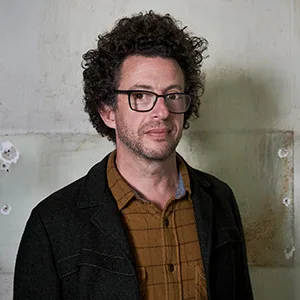
Philip Ross is an artist, inventor, and co-founder of MycoWorks, the biotechnology company that pioneered Fine Mycelium™ and brought mycelium leather to commercial scale. He coined the term mycotecture in 2008 and has worked with fungal materials for over 35 years. He is currently building Open Fung, a nonprofit developing open-source fungi, and is based in the California’s Bay Area.
Resources & Further Reading
Open Fung Open-source fungal research, protocols, and community resources. https://openfung.org/fungalresources
ExFAB Biofoundry NSF-funded biofoundry for extreme and exceptional fungi, archaea, and bacteria. UC Santa Barbara, UC Riverside, Cal Poly Pomona. https://exfab.org
ABPDU Advanced Biofuels and Bioproducts Process Development Unit. Lawrence Berkeley National Laboratory facility for bioprocess scale-up from bench to pilot scale. https://abpdu.lbl.gov
DOE 2023 Billion-Ton Report U.S. Department of Energy assessment of domestic renewable carbon resources. Oak Ridge National Laboratory. https://www.energy.gov/eere/bioenergy/2023-billion-ton-report
EuroFung European network for fungal biotechnology, founded 1995. Academic and industry members across 13 countries. https://www.eurofung.org
Fungal Genetics Conference Biennial conference of the Genetics Society of America, Asilomar Conference Grounds, Pacific Grove, CA. https://www.genetics-gsa.org/fungal
OpenMTA Open Material Transfer Agreement. Open legal framework for sharing biological materials without restrictive IP constraints. BioBricks Foundation and OpenPlant. https://biobricks.org/open-material-transfer-agreement Kahl et al., Nature Biotechnology 36:923–927 (2018). https://doi.org/10.1038/nbt.4263
CARE Principles for Indigenous Data Governance Global Indigenous Data Alliance. Collective Benefit, Authority to Control, Responsibility, Ethics. https://www.gida-global.org/care Carroll et al., Scientific Data (2021). https://doi.org/10.1038/s41597-021-00892-0
MycoWorks Life Cycle Assessment Peer-reviewed LCA for Reishi™ Fine Mycelium, published in Environmental Sciences Europe. 2.76 kg CO₂-eq per m², approximately 8% of the bovine leather benchmark. https://enveurope.springeropen.com/articles/10.1186/s12302-022-00689-x Williams, Cenian, Golsteijn, Morris & Scullin (2022). Environ Sci Eur 34:120.
Mo-Mei Chen Mycologist and Research Associate, University Herbarium, University of California Berkeley. Publications and cultivation resources. https://ucjeps.berkeley.edu/people/chen/